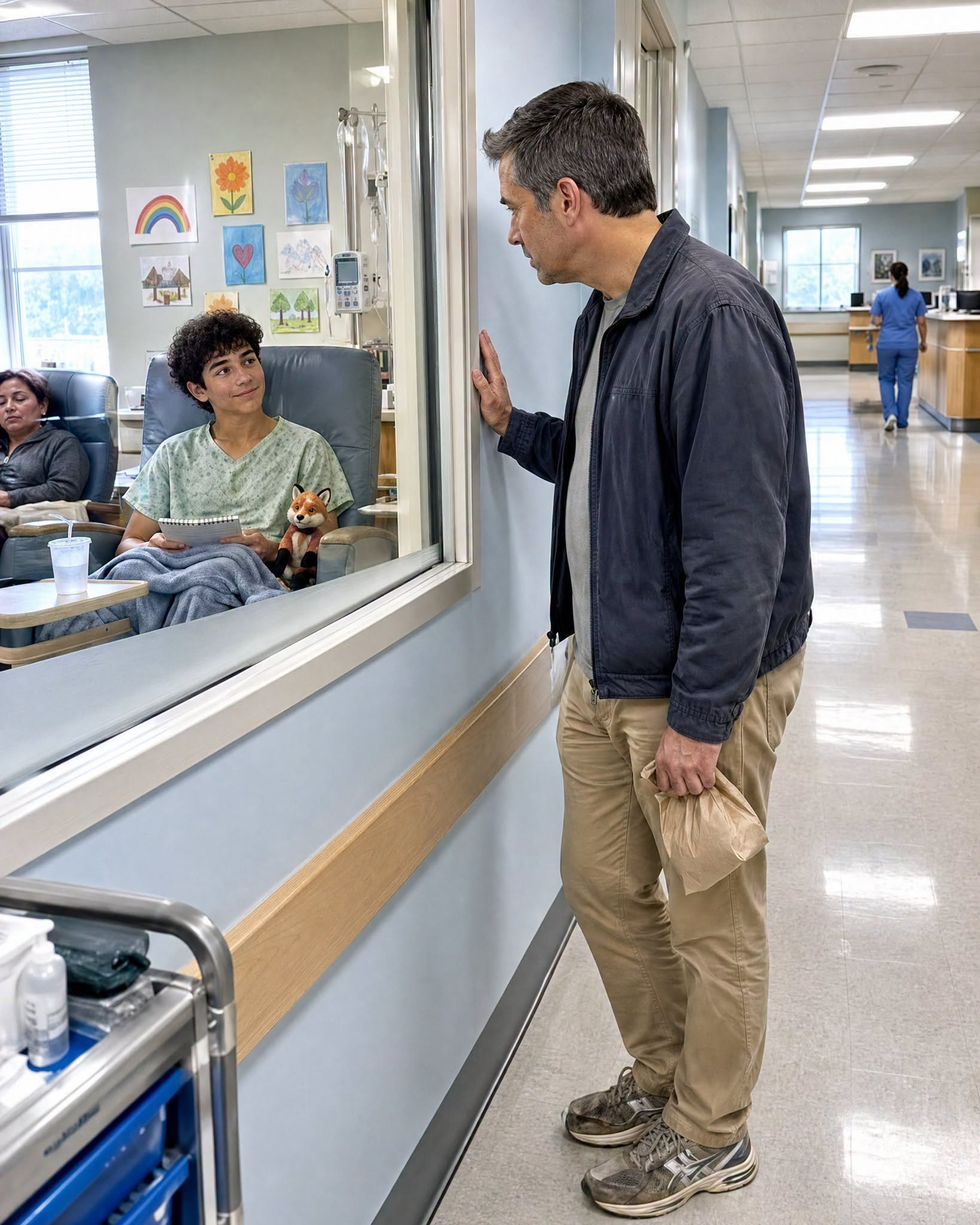
Not a single relative showed up while my daughter endured a grueling thirteen-hour operation—no phone calls, no text check-ins, absolutely nothing. Three days afterward, my father messaged me to ask if I could chip in $3,500 for my brother’s luxury destination engagement bash.
Certain moments in existence silently fracture something deep within your spirit forever. You rarely recognize them right as they unfold. Only later do you look back and realize the person who stepped into that experience isn’t the exact same soul who walked back out.
For me, that turning point arrived on a chilly Tuesday morning, hovering right around the eleventh hour of Lily’s surgery.
I sat completely isolated in the quiet hospital waiting room, staring blankly at a stale vending-machine sandwich I had purchased hours earlier but couldn’t summon the appetite to bite into. Every few minutes, my eyes darted to my phone screen. Nothing. Zero missed calls. No incoming texts. Not even one of those generic “Thinking of you” notes acquaintances send when they freeze up and don’t know what else to say.
For hour after hour, I scrambled to invent excuses for them. Maybe their cell networks were down. Maybe someone was stuck behind the wheel. Maybe they were simply waiting for definitive medical news before reaching out. But after eleven agonizing hours, excuses ran dry. Only cold silence remained.
My name is Jordan. I am thirty-eight years old, making a living as a project manager for a commercial renovation firm. Most days, that title translates to juggling multi-thousand-dollar construction projects while desperately trying to stop contractors, demanding clients, tight schedules, strict budgets, and hard deadlines from colliding.
Yet the single most important job description in my world has zero to do with blueprint construction. I am a dedicated single father. My daughter, Lily, is fourteen years old. And she means the absolute universe to me.
She is the kind of thoughtful kid who looks me in the eye and thanks me every morning when I prep her school lunch—even if my culinary effort involved nothing more impressive than dumping last night’s leftovers into a plastic container. She reads weathered paperback classics simply because she loves them. She carefully drapes a cozy blanket over our old rescue dog when she thinks no one is watching. She is brilliant, deeply observant, quiet, and infinitely kinder than the messy family dynamics she was handed at birth.
When I refer to my “family,” I mean my parents and my younger brother, Austin. There was a distinct era when I would have described us as a tight-knit clan. Not entirely flawless, certainly. Yet close enough to anchor birthdays, holiday gatherings, family dinners, active group chats, and all those standard milestones people point to as proof of belonging.
The shift began right after Lily came into the world. I was twenty-four at the time. Her mother and I had parted ways under intensely difficult circumstances, leaving me to step up and raise Lily entirely on my own. Instead of offering a safety net, my family reacted as if I had just committed some catastrophic life mistake.
Mom lectured me about how I was flushing my future down the drain. Dad casually suggested that Lily move into their basement because, in his cold words, “a growing child requires absolute stability.” He meant Lily, of course. Never me.
And Austin? He practically vanished from the map for an entire year. No congratulations offered. No drop-by visits. Nothing.
Eventually, everyone decided to sweep the friction under the rug and pretend things had improved. Mom took to posting flattering photos of Lily on social media, casting herself in the role of the doting matriarch despite rarely spending any actual time with her granddaughter. Dad would shove a crumpled twenty-dollar bill into Lily’s hand at Christmastime and act like he had spoiled her rotten.
Then Austin’s personal life matured, and he suddenly required my presence. He got engaged to Jen, whose family came from wealth, and overnight he needed constant assistance. Vanguard deposits. Event planning. Small cash loans. Last-minute favors.
Before I knew it, I had defaulted back into the designated fixer for everyone. I coordinated logistics. I solved crises. I handed out loans. I hosted holiday dinners. I swallowed sharp insults I never should have forgiven. For years, I brainwashed myself into believing that unpaid exhaustion was simply part of the definition of family.
Perhaps I was simply the dependable one. Perhaps carrying heavier loads was just the price of being reliable.
Then Lily fell gravely ill.
Roughly four months prior to that fateful Tuesday morning, specialists diagnosed her with a rare, aggressive spinal condition. While I didn’t grasp every complex medical term tossed around the exam room, I understood the terrifying bottom line. It was critical. Without major surgical intervention, the disease would progressively worsen until Lily permanently lost her capacity to walk.
The upcoming procedure would demand around thirteen hours in the operating theater. The recovery road would be brutal. The risks were terrifyingly real.
Right from the start, I kept my family fully briefed. I fired off routine updates. I relayed direct insights from her surgeons. I sat down with my parents to explicitly map out the surgery date and timeline. I wasn’t looking for financial handouts. I wasn’t even demanding they fix anything for us. I simply operated on the baseline human assumption that when my fourteen-year-old child faced the darkest medical battle of her life, her grandparents and uncle would simply show up.
They never did.
Hour after agonizing hour ticked past. I sat completely alone in that sterile waiting hub. Every couple of hours, a scrub nurse emerged to hand me a brief status update. Gradually, the surgical outlook tilted toward the encouraging side. Yet the deafening silence humming from my family grew louder by the minute.
By the seventh hour, I was still convincing myself they were likely caught in traffic. Maybe someone got delayed. Maybe they accidentally overlooked their text notifications.
By the tenth hour, I stopped gaslighting myself. My parents’ house sat a mere twenty minutes away from the hospital campus. Austin worked a fully remote job and never shut up about how flexible his daily schedule was. They weren’t trapped or unavailable. They had deliberately chosen to stay away.
Lily’s surgery spanned thirteen grueling hours. Miraculously, she pulled through. And not a single member of my bloodline bothered to ring my phone to check if she drew breath.
Then, three days later, my father finally pinged my phone. I stared at his contact header pop up on the display, nursing a foolish flicker of hope that it concerned Lily’s recovery.
Instead, his text demanded to know if I could kick in $3,500 toward Austin’s upcoming engagement celebration. They were staging an exclusive destination bash down in the Bahamas. Dad even capped off the demand with a cheerful smiling emoji.
I re-read the text bubble multiple times. At first, my brain rejected its reality. Then, a profound, chilling calm settled over my chest.
For years, I had tortured myself wondering if I was just overly sensitive. Wondering if my expectations were too high. Wondering if I was somehow the root cause of the family dysfunction. That text answered every lingering doubt.
When they needed a utility player, I was family. When I needed human support, I was entirely on my own.
The next morning, following another sleepless night curled up in a rigid plastic chair beside Lily’s hospital bed, I watched her eyelids flutter open. She was utterly exhausted. Her body throbbed with pain. She was terrified. Yet she managed a tired, brave smile the second I handed her a cup of crushed ice chips.
I gripped her frail hand, assuring her she was the bravest human being on Earth. Once she drifted back into medicated sleep, I pulled up my banking application. I executed a single wire transfer of one solitary cent straight into my father’s personal checking account. In the mandatory memo line, I typed out: Put it toward his future.
Then I initiated a complete purge of my life. Every streaming service subscription my relatives leeched off my account—cut off. Every credit card line they still held backup access to—permanently frozen. Every shared login password—wiped clean. Every emergency cash stash they had guilted me into maintaining on their behalf—withdrawn and closed.
I didn’t issue press releases. I didn’t call to pick a fight. I simply shut off the tap.
The following morning at precisely 6:03 AM, my cell phone buzzed violently against the nightstand. Seventeen consecutive missed alerts. All originating from Mom.
Initially, I let it ring into voicemail. Eventually, the deeply ingrained childhood conditioning clawed at my conscience—that toxic guilt whispering that ignoring them meant I was committing a moral wrong.
By the sixth incoming ring, I swiped to accept. Mom didn’t waste breath asking about Lily’s post-op status. She didn’t even offer a standard greeting.
“What is entirely wrong with you?” she shrieked through the speaker. “Your father is locked out of Hulu. Austin claims his gym key card just failed at the turnstile. And did you seriously send your father a single penny?”
I stood stiffly in the quiet hallway just outside Lily’s recovery ward. “Did you completely forget that Lily just underwent major surgery?”
Mom pivoted instantly into defensive mode. “Of course we didn’t forget.”
“You never even called.”
Heavy silence hung on the line.
“You didn’t send a text. You couldn’t be bothered to ask if she survived a thirteen-hour operation.”
She sighed dramatically. “We knew you had everything entirely under control. Your father despises clinical hospital environments, and Austin has been drowning in destination planning. We simply didn’t want to overwhelm you.”
Overwhelm me. A harsh, humorless laugh choked in my throat. “I sat by myself for thirteen straight hours while surgeons cut into my daughter’s spine.”
My voice dropped into a dangerous register. “You weren’t worried about overwhelming me. You just refused to be inconvenienced.”
Mom deployed the exact psychological weapon she had used against me for decades. “Jordan, stop being so theatrical. You are always desperate to cast yourself as the victim.”
There it was. That familiar verbal execution. The exact same dismissive tune I had grown up listening to whenever Austin was handed unearned privileges while I was left behind. When I worked grueling night shifts through college while his lifestyle expenses were fully absorbed. When I chose single fatherhood and they warned me my daughter would ruin my trajectory.
I hit end call and severed the connection.
Over the subsequent forty-eight hours, hostile incoming messages flooded my inbox. Dad fired off clipped warnings: We need to talk immediately. Austin feigned total confusion: Bro, what is your deal? Mom is losing her mind. Can you fix Netflix?
Then Mom dropped a towering tirade accusing me of lacking a human heart. According to her text manifesto, I was cutting off my own flesh and blood over “one tiny oversight.”
An oversight. That was their casual label for abandoning a terrified fourteen-year-old girl during an invasive spinal reconstruction.
Meanwhile, down in reality, Lily was fighting to conquer gravity again. She gripped the metal handles of her walker with trembling palms, treating every three-foot increment of progress like she was crossing an Olympic finish line.
The most agonizing part of it all? She never once inquired why my side of the family failed to show their faces. She didn’t ask about her grandparents. She didn’t ask about her uncle. Young as she was, her heart had already learned the bitter lesson of not expecting them.
When we finally transitioned her home, I meticulously stripped and re-made her bed, stocked extra orthopedic pillows, piled her favorite novels on the nightstand, and settled her in. That evening, standing alone in the kitchen, I made a solemn vow to the universe. My daughter would never experience the sting of abandonment as long as I drew breath.
A week later, an expensive piece of mail arrived in the drop-box. Heavy cardstock. Gilded foil trim. Embossed typography. Austin’s formal wedding engagement invitation. The exact same vanity celebration my father had tried to strong-arm me into financing. The resort destination was logged at an ultra-exclusive Bahamian retreat in Nassau. The formal envelope read: Uncle Jordan and Lily.
As if reality could be rewritten by a graphic designer.
Lily spotted the envelope sitting on the counter before I could slide it into the recycling bin. “Are we flying out for this?” she asked innocently.
I offered a reassuring smile. “No, sweetheart. We have far better plans.”
Seven days later, Austin paid my house an unannounced visit. He sauntered across my threshold sporting designer sunglasses and wearing that untouchable arrogance he always wore when he wanted a favor extracted. “We need to have a serious talk,” he announced.
“About what specific topic?” I asked calmly.
“The whole hospital surgery drama.” The drama. He shrugged nonchalantly. “Look, you’ve always played the role of the invincible anchor. We all knew you could handle a clinic visit on your own. It’s not like you actually needed us standing around holding clipboards.”
I stared flatly at my younger brother. “That right there is the core disease, Austin. None of you ever factor in whether I need anything. You only view showing up as transactional—worthwhile solely when it serves your personal convenience.”
He rolled his eyes with theatrical fatigue. Then he finally unmasked the true catalyst for his house call. The revoked gym membership. It turned out Jen had been actively routing her pre-wedding fitness training through my corporate account. Followed quickly by complaints regarding the severed credit line. “That pool of money was earmarked for family emergency safety nets!”
I let out a dry, incredulous breath. “I operated under the naive impression that families actually showed up for one another in emergencies.”
He abruptly changed his strategic approach. He whined that Jen’s affluent parents were breathing down their necks demanding to know why I wasn’t RSVPing. Apparently, Austin had smoothed things over by explaining to them that I was merely experiencing a “dramatic mental episode.”
Then he dropped his closing pitch: “Dad also mentioned that if you’re stubbornly sitting out the trip, maybe you could at least offset the open bar tab. We’re running dangerously over budget.”
I held his gaze for three long seconds. Then I swung the front entry door wide open. “Get out of my house.”
His jaw dropped in genuine shock. “Pardon?”
“Leave my property right now. And don’t ever darken my doorway again unless you are bringing a sincere, unconditional apology for Lily.”
His features hardened into pure venom. He spat accusations that I was reveling in a toxic martyr complex. Branded me as bitter and resentful. Sneered that I always thought I was morally superior to the rest of the bloodline.
I offered zero verbal ammunition in return. I simply stood motionless, holding the door wide until he stormed out past my shoulder.
Forty-eight hours before their charter flight lifted off for the islands, Mom dropped a blistering voicemail on my phone. She shrieked that I was actively humiliating the family name. Dismissing Lily’s grueling major operation as “one minor family hiccup.”
That night, Lily caught me pacing a trench into the kitchen tiles. By then, she had successfully graduated down to navigating the house with just a single crutch. “Dad, are you holding up okay?”
I stopped pacing and looked down at my fighter. “I’m finally walking away, sweetheart.”
“Walking away from what?”
“From chasing people who refuse to care.”
She crossed the kitchen floor and locked her arms around my waist in a tight embrace. And in that exact heartbeat, a profound inner peace settled into my bones. I wasn’t destroying a family unit. I was simply breaking an exhausting lifetime habit of chasing ghosts who had never truly stood beside me.
The following morning, a sympathetic family friend dropped a digital screenshot into my direct messages—pulled straight from Jen’s public social media feed. There they were, soaking up the tropical Bahamian sun. My parents. Austin. Jen. Clinking cocktail glasses with gleaming, plastic grins plastered across their faces. The caption read: Surrounded by all the genuine humans who matter most.
That single photo snapped the final taut wire inside my chest. The last micro-temptation to patch things over vanished into ash. Instead, my mind locked onto a singular, constructive mission: rebuilding my life from the ground up.
Initially, the foundation-laying was messy and exhausting. While Lily continued her physical healing trajectory, massive medical balance statements began flooding our mailbox. Even with comprehensive insurance coverage, the remaining out-of-pocket totals were astronomical. Surgical specialists. Clinical facility overhead. Intensive physical therapy blocks. At my primary job, my performance began to slip. I missed critical email threads. Insomnia wrecked my cognitive focus. I managed to keep the household functioning for Lily’s sake, but my emotional reserves were entirely depleted.
Then an unexpected lifeline dropped. A high-end corporate client noticed my mental strain. Her name was Diane, and she directed a local non-profit community arts foundation whose multi-phase facility renovation I was currently managing.
One afternoon, she cornered me gently in the site trailer. “Jordan, look me in the eye. Are you secretly drowning?”
Such a stark, genuine human inquiry. It nearly broke my stoic armor right on the spot. I confessed to a sanitized fraction of reality—that my daughter had cleared a major medical hurdle, life had been chaotic, and I was struggling to keep all the plates spinning.
Diane didn’t pry or demand personal gossip. She simply offered a steady anchor: “You are world-class at what you do, Jordan. If you ever need independent side contracts, strong references, or extra project work to cushion things, pick up the phone and dial me.”
A week later, a trusted commercial subcontractor named Miguel reached out with an urgent need. He required an experienced project manager to consult on the architectural review for a private commercial build. Generous contracting rates. Flexible operational hours. I accepted on the spot.
That commission sparked a domino effect. Another consultancy offer arrived. Then another.
Slowly, I unlocked a dormant professional confidence I had buried under years of acting as my family’s eternal emergency cushion. I realized a fundamental truth: I was exceptionally skilled at my profession.
One late afternoon, while clearing out clutter in the garage, my hand brushed against an old, leather-bound Moleskine notebook. Flipping through the brittle pages, I uncovered detailed business outlines and strategic frameworks I had drafted years prior for an independent venture. A specialized project-management and construction-consulting firm tailored strictly for small local businesses and community non-profits locked out of hiring bloated corporate architecture agencies.
The original dream had stalled out because life intervened. Lily happened. Endless family obligations happened.
That night, I carried the leather notebook indoors, laid it flat on the kitchen table, and cracked the spine. This time around, I refused to close it.
I spent midnight hours researching independent licensing protocols. Corporate entity registrations. Digital web hosting. Professional liability bonds. Business banking structures.
Within weeks, the official paperwork was stamped and filed. True North Projects officially drew its first breath.
I constructed the business quietly, brick by brick. Diane successfully funneled two local arts accounts my way. Miguel connected me with a sharp graphic designer who built a clean, professional brand identity for cost of materials. I opened a dedicated business checking account, secured a professional mailing suite, and drafted clean digital invoicing templates.
By month three, I was actively managing four recurring commercial clients with a healthy waiting list trailing behind them. One regional non-profit hired me strictly to audit their facility operating expenses. By streamlining their contractor bids, I sliced more than $8,000 off their annual overhead. In gratitude, their board voluntarily wrote me a contract bonus doubling my agreed fee.
I wasn’t suddenly swimming in wealth. Yet for the first time in memory, the crushing sensation of financial suffocation lifted from my chest.
Concurrently, I re-entered professional therapy to untangle the wreckage. During a particularly heavy session, I laid out the entire timeline—the surgery, the radio silence, the tropical wedding trip, the toxic text trails, the financial extortion.
My therapist listened without interruption, letting the weight of the story settle. Then she offered a sentence that re-calibrated my worldview: “Jordan, you haven’t been grieving the loss of a functioning family. You’ve been desperately grieving a relationship that never actually existed in the first place.”
The validation cut deep, but it acted as a chemical disinfectant. I had spent decades anchoring my identity to a romanticized illusion of familial harmony—holiday snapshots, festive dinner tables, cheerful group message chains. Yet the moment genuine life-or-death adversity struck, the entire mirage evaporated into thin air.
Meanwhile, Lily became an enthusiastic stakeholder in True North Projects. She spent her evenings sketching out potential corporate logo concepts on neon sticky notes and slapping them across the lid of my laptop. “You’re going to crush this market, Dad.”
Then, a completely unexpected phone call scrambled the baseline. A young woman named Emma reached out via my business line. She had served as one of Jen’s bridal bridesmaids down in the Bahamas.
“I sincerely hope calling you like this isn’t crossing an aggressive boundary,” she began, her voice shaking slightly. “But there is vital information you deserve to know.”
My posture went rigidly alert. “What kind of information?”
“There was a private digital chat group set up for the inner circle.”
I sat up straight in my office chair. “What specific chat group?”
“The wedding planning and logistics thread. Someone accidentally retained me in a sub-thread conversation history from months prior that I was never meant to read.”
Sixty minutes later, Emma’s secure email dropped into my inbox, carrying more than seventy high-resolution screenshots.
I read through the text threads once, my expression turning stone cold. Then I poured a cup of black coffee and read them a second time.
My mother had systematically mocked my psychological stability to the entire wedding party. My father had cracked cynical public jokes regarding Lily’s medical vulnerabilities. Austin had typed out flat admissions that he was “sick and tired of feeling burdened by Jordan drowning in his self-inflicted life choices.” Jen had openly designated me as the family’s resident “cautionary tale.”
They had actively conspired to paint my absence as erratic behavior, strategizing ways to preemptively gaslight mutual acquaintances into believing I was simply too unstable to attend a luxury destination event.
Then my eyes scrolled down to the chat blocks logged right on the eve of their Bahamian departure. They had been actively scheming on how to squeeze me for yet another targeted financial bailout. This time, explicitly targeted to subsidize Austin’s post-wedding honeymoon trek.
My father had typed into the group chat that I still maintained a legacy emergency reserve savings account and that, as the older brother, I “owed it to fund the family legacy.”
Austin’s typed reply sealed the coffin: If he pushes back or says no this time around, we officially cut him loose. Drop the dead weight and stop pretending.
I stared intently at that single word glowing on my screen: Pretending.
That single word defined the entire architecture of my past forty years. A hollow stage production maintained strictly as long as I served a functional, cash-flowing purpose.
I didn’t lose control. I didn’t scream at the walls, nor did I throw a public temper tantrum by posting the receipts across public social media platforms. Instead, I systematically cataloged the evidence. I exported the files. I printed out clean physical copies—timestamps, digital handles, direct quotes, financial demands, cruelty. I backed up the digital archives to secure cloud storage.
Then, I sat down and drafted a formal, unvarnished six-page letter to my family network.
It contained zero emotional histrionics or screaming matches. It was purely an undeniable audit of facts. I mapped out the multi-year pattern of financial parasitism. I documented the total abandonment during Lily’s spinal reconstruction. I itemized the insults, the calculated manipulations, the exposed digital chat logs.
I concluded the letter with a definitive closing paragraph: As of today’s date, I am permanently severing all familial ties. This action is not a reaction to a single isolated incident; it represents a hard boundary against a systemic behavioral pattern I will no longer tolerate. I am neither seeking an apology nor will I acknowledge future guilt-tripping correspondence. I am officially withdrawing all ongoing financial, structural, and emotional support from individuals who consciously disrespect my daughter and me.
I printed hard copies and mailed them via certified delivery to my parents, to Austin, and to Jen. Then I closed the laptop lid and went back to building my business.
True North Projects maintained its aggressive growth trajectory. I refreshed our digital presence, penning an open, professional blog post detailing the human philosophy behind why I launched the firm. I avoided naming specific individuals or airing dirty corporate laundry. Instead, I shared a universal narrative: a single father systematically rebuilding his universe after discovering how completely isolated he truly was when the storm hit.
With Lily’s proud, verbal blessing, I also published a newsletter essay titled: Walking Again: What My Fourteen-Year-Old Daughter Taught Me About Standing Tall.
The digital essay went viral within regional networks. Clients forwarded the link to industry peers. Within a seven-day window, three major regional architectural firms reached out to discuss long-term project partnerships. Shortly after, an editor at a prominent local business journal contacted me requesting an extensive feature profile highlighting my journey as a single-parent entrepreneur overcoming structural adversity.
I accepted the interview. The published spread featured a sharp, authentic photograph of Lily and me laughing together at a local park, our shoulders squared, moving forward. The cover headline championed business resilience and personal rebirth.
Three days after the issue hit newsstands, my phone lit up with a text from Mom: How can you be so viciously cruel as to drag our name through the mud like this?
I archived the notification without a single reply. Austin fired off a frantic email claiming my public profile was destroying the family’s pristine social reputation. Yet I hadn’t named a single soul or dragged a single specific person through the dirt. I had simply stopped protecting the fraudulent narrative they preferred the world to swallow.
Simultaneously, I executed a complete financial decoupling. That legacy emergency savings account my family historically viewed as their personal rainy-day fund? I liquidated the entire balance, rolling it into a secure, locked educational and medical trust exclusively designated for Lily’s future. Not a single cent remained accessible to anyone else.
Next, I hauled out every remaining historical financial artifact tying my identity to my parents. Decades-old co-signed credit lines. Old mutual insurance documents. Dormant joint accounts left open from my college days.
One by one, with the assistance of legal counsel, I severed every financial tether anchoring me to my past. For the absolute first time in my adult existence, zero financial cords tied my survival to my bloodline.
Around that same period, the local pediatric spinal research organization that hosted the fundraising gala caught wind of the journal profile. They reached out with an invitation to serve as a keynote speaker for their upcoming annual advocacy summit. The event date happened to fall on the exact same weekend as Austin’s grand domestic wedding reception.
I accepted their invitation without a millisecond of hesitation.
On the night of the summit, Lily stepped out wearing a stunning, simple navy dress. I fished a well-tailored charcoal suit out of the back of my closet and brushed off the lapels. That evening, we sat in the front row surrounded by pioneering pediatric surgeons, courageous rehabilitation therapists, and resilient patient families who understood at a cellular level the terrifying reality of spinal trauma.
The gala successfully raised over $200,000 for ongoing research initiatives. When my name was called, I stepped up to the podium and delivered a concise, unvarnished talk.
As I closed my remarks, I looked out across the auditorium: Some individuals learn to construct new foundations while standing entirely alone in the rubble. Others learn how to force their legs to walk again after being repeatedly warned that the path ahead is impassable. But no human being should ever be forced to audition or pay a toll to earn the basic human love they inherently deserve.
Someone in the back row recorded the closing statement on their phone and uploaded it to video-sharing networks. The clip caught fire online. By pure coincidence, one of Jen’s extended relatives happened to scroll past the video stream while sitting at a table during Austin’s wedding reception banquet.
Whispers spread through their guest circle. Questions began circulating among old family acquaintances. Yet I wasn’t within a thousand miles of their banquet hall. I was safely back across town, sitting quietly on the living room sofa beside my thriving daughter.
Weeks later, Emma pinged my inbox with one final update. She attached a secure digital copy of the wedding videography highlights reel. You probably won’t have the stomach for this, but you really need to watch the father-of-the-groom speech segment.
I hovered my cursor over the play button, nearly closing the file out of hand. Then I clicked play.
My father stood tall before the glittering reception crowd, champagne flute gripped in his hand, projecting a warm, patriarchal smile. He spent the first five minutes praising Austin as his steadfast, reliable anchor son. The golden child. The shining example of a young man who consistently made “smart, strategic life choices.”
Then he pivoted his speech toward metaphorical musings about family trees, pontificating about how certain branches grow strong and prosperous while other flawed branches inevitably snap off and wither away.
A wave of polite, compliant laughter rippled through the wedding guests. Then my father delivered his closing punchline: At the end of the day, true maturity means mastering the discipline of choosing who truly deserves a permanent seat at your table. And standing here tonight looking around this room, I know with absolute certainty that we have gathered the exact right people here.
I sat completely motionless in my home office, watching the screen. They weren’t merely choosing to ignore my existence anymore. They were actively manufacturing a revised historical record. Casting me permanently in the role of the unstable, toxic son. The broken branch. The family embarrassment.
That was the exact second I realized I would never again waste a single calorie of energy attempting to police or correct other people’s fictional narratives about my life.
A few weeks later, the organizers of the pediatric research foundation invited me back to participate in a public empowerment masterclass series designed for regional business founders who had successfully clawed their way out of severe personal trauma.
I agreed immediately. I invested weeks structuring my presentation framework. My address wasn’t built on vengeance or mudslinging. It was an masterclass focused entirely on ironclad boundaries. On ruthless personal resilience. On what happens when you finally stop suffocating inside someone else’s weaponized definition of who you are supposed to be.
Lily occupied the front row center seat. Right before the stage lights blinded me, she reached up, grabbed my thumb, and squeezed it hard. “You’re going to crush this, Dad. Tell the world.”
I stepped up to the microphone and walked the audience through the raw math of that hospital room. Thirteen long hours. Zero incoming calls. Zero text check-ins. The cynical demand for $3,500 three days post-op. The single-penny wire transfer. The exposed chat transcripts. The quiet construction of True North Projects from the ashes of betrayal.
And as I brought the house down, I delivered the central thesis: Sometimes, the individuals who inflicted the deepest wounds will viciously resent your successful healing process because your sustained recovery forces them to stare directly into the mirror of their own cruelty. When you step off the stage and refuse to keep playing the assigned victim role they handed you, they will panic and attempt to rewrite the entire script. But real, unshakeable truth has zero need to beg for their permission to exist.
The summit posted the complete keynote recording online the following morning. Within forty-eight hours, view counts surged past 100,000 hits. A prominent digital entrepreneurship channel picked up the clip, retitling it: Eradicated by His Own Bloodline—Then He Built an Empire They Could Never Ignore.
Nostalgic messages poured in from forgotten high school classmates. Dozens of former corporate colleagues reached out to reconnect. Hundreds of messages flooded my inbox from single parents weathering similar family tornadoes, expressing that for the first time in their lives, they felt entirely seen and understood.
Austin made one panicked, reactive attempt to drop a hostile, defensive comment beneath one of the viral reposts, accusing me of fabricating historical events purely for public clout. The community backlash against his comment was so swift and overwhelmingly toxic that he deleted his profile handle within twenty minutes.
Then real karma quietly began working its own machinery. Acquaintances who had orbited my family dynamic for decades started asking sharp, uncomfortable questions. One of Austin’s former college fraternity brothers reached out to me directly: Hey Jordan, I gotta ask a straight question. Is it factual that your parents forced you to co-sign their primary mortgage notes back when you were barely out of college?
“Yes, every word of it is true,” I replied.
The guy went dead silent on the line. It turned out my parents had been peddling a radically sanitized, heroic version of that financial exploit around their local social circles for years.
Jen’s cousin reached out next through professional channels to offer a formal, unprompted apology for her role in the family echo chamber. She dropped a casual bombshell: members sitting on the board of one of Dad’s prestigious civic leadership committees had stumbled across my keynote address online. My father had spent his entire life curating a public reputation anchored entirely on strict personal ethics, community transparency, and moral integrity.
Not long after the video circulated through professional networks, my father quietly lost his seat on the board, eased out under the guise of an “early retirement.”
Simultaneously, Austin’s long-sought commercial business partnership collapsed when his prospective high-net-worth investors conducted standard background due diligence and realized his personal and professional values were fundamentally misaligned with ethical standards.
I never made a single celebratory phone call. I didn’t pop champagne or track their professional downfalls. I didn’t need to.
For the first time in my existence, the consequences landing on their doorstep had zero to do with me stepping in to manage, cushion, or fix their messy realities.
And in the wake of that storm came the greatest, most profound gift imaginable: Total, unbroken peace.
The frantic morning phone calls ceased permanently. The toxic financial demands vanished into the ether. No one dialed my line demanding an emergency cash advance. No one demanded master security passwords. No one threw tantrums demanding I rescue their vanity celebrations.
Our household transformed into an oasis of tranquility.
True North Projects expanded into a thriving regional enterprise. Lily continued capturing her health back day by day. She successfully cleared physical therapy and joyfully returned to competitive recreational dance classes. She enrolled in an advanced online coding academy, blowing past curriculum milestones. She walked with complete fluid independence, unassisted by braces or crutches. And nightly dinner table conversations increasingly centered on college campus applications and future dreams.
One lazy afternoon, months down the road, she looked up from her geometry textbook and asked: “Dad, do you honestly think they will ever wake up and send a real apology?”
I paused, turning the question over in my mind. Then I offered a slow, calm shake of my head. “Honestly, sweetheart? Probably not in this lifetime.”
She absorbed the answer, gave a quiet nod, and closed her textbook. “You know what? I think I am completely okay with that reality.”
I looked across the table at my daughter, her eyes bright, her spirit unbroken. And I realized with absolute clarity that I was entirely at peace with it too.
For years, I labored under the delusion that true closure would arrive the exact second my parents finally broke down and confessed their parental failures. I mistakenly believed I required Austin to wake up and understand the damage he caused. I thought an external validation stamp was mandatory to heal my soul.
It wasn’t.
Lily and I had successfully authored our own triumphant final chapter. We hadn’t survived because my biological family finally decided to step up and do the right thing. We survived precisely because we stopped wasting precious time waiting for them to arrive.
That evening, Lily curled up across the living room sofa with a battered paperback thriller while our fluffy rescue hound flagrantly violated every single household rule I had ever established regarding keeping paws off the furniture upholstery.
Heavy corporate project folders blanketed one half of the coffee table. Her high school math binders occupied the other half.
It wasn’t an aesthetically curated lifestyle. It lacked the fake, polished perfection my parents had dedicated their entire lives to projecting to the outside world.
Instead, it was gritty. It was authentic. It was unscripted. Zero theatrical performances. Zero meticulously choreographed social media smiles. Zero pretending.
Just Lily and me.
And for the first time in a very long, exhausting journey, that simple truth was more than enough to anchor the world.