Lobsters are one of those foods that can turn an ordinary meal into an occasion.
They arrive at the table bright red, usually tucked into a pile of ice or sitting proudly on a plate, with claws, tail, and shell all announcing that you’re about to eat something a little more special than dinner. Crack through the shell, dip the sweet meat into melted butter, and you have one of the classic seafood experiences.
But if you’ve ever taken apart a whole lobster, you may have encountered something that looks considerably less appetizing.
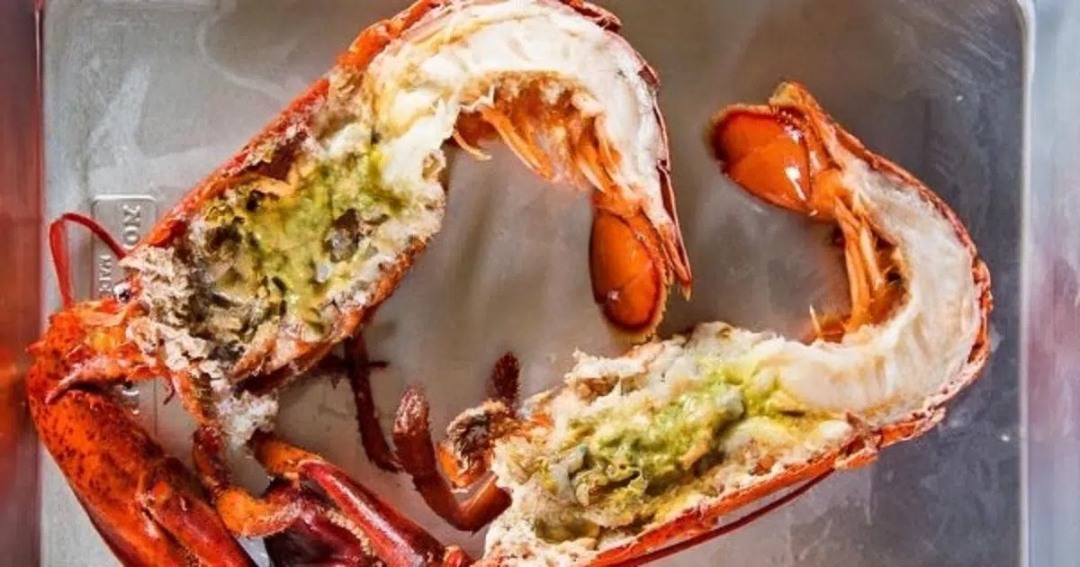
A soft, green, creamy substance tucked inside the body.
What is that?
Is it something you should eat?
Is it part of the lobster’s digestive system?
And why does something that looks like green paste have people deliberately saving it?
The mysterious green substance is called tomalley, and it is one of the most interesting—and occasionally controversial—parts of a lobster.
For some seafood lovers, tomalley is a prized delicacy with an intensely rich flavor. Others see the green stuff inside their lobster and immediately decide they’d rather stick with the familiar claw and tail meat.
Both reactions are understandable.
So let’s crack open the mystery of lobster’s green goodies and find out what that green substance actually is, why lobsters have it, how people eat it, and why there are some important food-safety considerations to keep in mind.
What Exactly Is Lobster Tomalley?
When you split open a lobster, the green material you find inside the body cavity is generally called tomalley.
It has a soft, creamy consistency and can range in color from green to greenish-brown depending on the lobster and its condition.
The word itself can sound mysterious, but tomalley isn’t some strange substance that appears inside lobsters after they’re cooked.
It’s an actual organ system.
More specifically, tomalley is the lobster’s hepatopancreas, an organ that combines functions associated with the liver and pancreas in vertebrates.
That might not sound particularly appetizing when you put it that way.
But from the lobster’s perspective, this organ is incredibly important.
The hepatopancreas plays major roles in digestion, nutrient absorption, storage, and metabolism. It helps process food and stores energy for the lobster to use later.
So that little green mound isn’t just random material hiding inside the shell.
It’s one of the lobster’s most important organs.
And yes, humans have decided that it’s edible.
Why Is Tomalley Green?
This is one of the first questions people ask when they see it.
Why green?
Why not pink, white, or brown like the meat?
The answer is tied to what the organ does.
Because the hepatopancreas is involved in digestion and processing nutrients, it contains various pigments and biological compounds that give it its characteristic color.
The exact shade can vary. One lobster might have a vivid green tomalley, while another may have something closer to olive or greenish-brown.
So don’t expect every lobster to contain a perfectly identical blob of emerald-green paste.
The appearance can change naturally.
And because you’re looking at an internal organ rather than muscle meat, the texture is very different from the firm, springy lobster meat you’re probably accustomed to eating.
Tomalley is soft.
Creamy.
Almost pâté-like.
For people who love rich seafood flavors, that’s part of the appeal.
For everyone else, it’s perhaps the exact opposite of appetizing.
What Does Tomalley Taste Like?
This is where opinions can get very divided.
Lobster meat has a relatively mild sweetness. It’s delicate, slightly briny, and tender, which is why butter works so well with it.
Tomalley is a completely different experience.
Its flavor is typically much richer and more concentrated. It can have an intense seafood taste with a savory, briny character and a creamy texture.
Some people describe it as the part of the lobster with the most concentrated flavor.
Others find it too strong.
And that’s perfectly normal.
Think of tomalley as being closer to an intensely flavored seafood spread than a piece of lobster meat.
You don’t necessarily sit down and eat a large spoonful of it.
Instead, people who enjoy it may use a small amount to add depth to sauces, spreads, or other seafood dishes.
It’s a bit like discovering that the lobster has its own built-in condiment.
Is Tomalley Safe to Eat?
This is where things get more complicated.
Historically, people have eaten lobster tomalley in various culinary traditions. However, there are legitimate food-safety concerns associated with consuming lobster hepatopancreas.
The reason is that the organ can accumulate certain contaminants from the lobster’s environment.
Because the hepatopancreas is involved in filtering and processing materials from food and the surrounding environment, it can contain higher concentrations of some contaminants than the muscle meat.
One particular concern is marine biotoxins associated with harmful algal blooms.
These toxins can enter marine ecosystems and accumulate in shellfish and other marine organisms.
Cooking does not necessarily make every marine toxin harmless.
That’s an important distinction.
Heat can kill many microorganisms, but it doesn’t automatically eliminate every chemical toxin or contaminant.
As a result, food-safety authorities have sometimes issued specific warnings about eating lobster tomalley, particularly when environmental monitoring has identified elevated toxin levels.
This is why it’s not enough to say, “Lobster is safe, so every part of the lobster must be safe.”
Different tissues can accumulate different substances.
What About Lobsters From Clean Water?
It might seem logical that if you know exactly where a lobster was caught, you can determine whether its tomalley is safe.
Unfortunately, it’s not always that simple.
Marine contamination isn’t something you can reliably detect by looking at the lobster.
Tomalley can look perfectly normal and still contain a contaminant.
Color isn’t a reliable test.
Smell isn’t a reliable test.
And tasting a little bit isn’t a good way to find out.
Environmental monitoring and public-health advisories are much more useful because they take into account information about toxin levels and local conditions.
That’s why it’s worth paying attention to seafood advisories when you’re eating locally caught lobster.
If a health authority advises people not to consume lobster tomalley from a particular area, that’s a warning worth taking seriously.
And if you’re unsure about the source or current safety guidance, skipping the tomalley is the easiest option.
You still get to enjoy the lobster meat.
Why Do People Eat It?
With all those caveats, you might reasonably wonder why anyone bothers.
The answer is simple:
Flavor.
For people who enjoy tomalley, the green organ is considered one of the best parts of the lobster.
Some traditional preparations use it because it contributes an intense seafood richness that ordinary lobster meat doesn’t provide.
Instead of throwing it away, cooks may incorporate it into sauces, soups, spreads, or butter-based preparations.
It’s especially useful when you want to make a dish taste more deeply “lobstery.”
And for some seafood enthusiasts, eating the tomalley is simply part of the experience of eating a whole lobster.
There’s something appealing about using as much of the animal as possible rather than discarding edible portions.
But that doesn’t mean you have to like it.
Lobster is expensive enough without adding a culinary challenge to the meal.
If you prefer the claws and tail, nobody is going to judge you.
How to Find the Tomalley
If you’re eating a whole cooked lobster and want to see what all the fuss is about, the tomalley is located inside the body cavity.
Once the shell is opened, you’ll notice the soft green material inside.
It’s quite different from the firm muscle meat in the tail and claws.
You can remove it with a small spoon or simply leave it where it is.
If you’re unfamiliar with lobster anatomy, don’t worry about trying to identify every internal structure. You don’t need to become a marine biologist before enjoying dinner.
And remember: if you’re specifically considering eating tomalley, food-safety guidance matters more than appearance.
A bright green color doesn’t guarantee safety, and a slightly different shade doesn’t automatically mean something is wrong.
How People Traditionally Eat Tomalley
For those who enjoy it and where local food-safety guidance permits consumption, there are several ways tomalley can be used.
Spread It on Bread or Crackers
One of the simplest approaches is to treat tomalley like a rich seafood spread.
A small amount can be placed on bread or crackers, sometimes alongside lobster meat.
Because the flavor is strong, you don’t necessarily need much.
Think of it as a concentrated ingredient rather than something that needs to cover an entire slice of toast.
Mix It With Butter
Butter and lobster are already a famous combination.
Adding tomalley takes that combination in an even richer direction.
The creamy texture can blend into melted butter, creating a deeply savory sauce for lobster meat or other seafood.
Again, moderation is key—not only because of the intense flavor but also because of the food-safety concerns surrounding tomalley.
Add It to Sauces
Tomalley can also be incorporated into seafood sauces.
A small amount can contribute richness and a concentrated lobster flavor, making it useful in dishes where you’re trying to build a more complex seafood base.
Some cooks incorporate it into soups or other preparations for the same reason.
The goal isn’t necessarily to taste the tomalley as a separate ingredient.
It’s often about using its flavor to enhance the rest of the dish.
How to Handle Tomalley
If you’re preparing whole lobster at home, handle the tomalley just as carefully as you would any other perishable seafood.
Keep the lobster properly refrigerated before cooking, cook it thoroughly, and avoid leaving cooked seafood sitting at room temperature for extended periods.
If you have concerns about the lobster’s source or whether there is a current local advisory concerning tomalley, check the relevant food-safety guidance before eating it.
And if the lobster has an unusual odor or appears spoiled, don’t try to rescue it by eating only the “good parts.”
When seafood seems questionable, the safest choice is to discard it.
Tomalley Isn’t the Same as Lobster Meat
This may sound obvious, but it’s an important distinction.
The white meat in the tail, claws, and other edible muscles is muscle tissue.
Tomalley is an internal organ.
That difference helps explain why their textures, flavors, and nutritional profiles can be so different.
The tail meat is firm and sweet.
The claw meat is tender and delicate.
Tomalley is creamy and intensely savory.
If you’re eating lobster for the first time, there’s no reason to assume you need to eat every part of it.
You can enjoy the meat and leave the rest behind.
In fact, for people who aren’t accustomed to eating organ meats, that may be the more comfortable approach.
What If You Don’t Want to Eat It?
Nothing.
Seriously.
You don’t have to.
There is no lobster-eating rule that says you must scoop out the green material and give it a try.
If the appearance makes you uncomfortable, simply leave it alone.
If you’re concerned about contaminants, skip it.
If you don’t like the flavor, skip it.
If you’re at a restaurant and don’t know whether there are current advisories affecting the source of the lobster, skip it.
There’s plenty of delicious meat waiting in the tail and claws.
Tomalley is an optional part of the experience, not a required one.
The Curious World Inside a Lobster
One of the most interesting things about tomalley is that it reminds us how different the anatomy of a lobster is from the anatomy we’re used to seeing in familiar land animals.
When you eat a steak, you’re eating muscle.
When you eat chicken breast, you’re eating muscle.
When you eat lobster tail, you’re also eating muscle.
But when you open the lobster’s body cavity, you’re looking at an entirely different collection of organs and tissues.
Tomalley happens to be one of the most visible—and edible—ones.
That’s part of what makes whole lobster so fascinating.
You’re not just eating a neatly packaged piece of seafood.
You’re dealing with an entire animal, shell and all.
For adventurous eaters, that can be part of the fun.
So, Should You Try the Green Stuff?
The answer depends on your taste and the food-safety guidance applicable to the lobster you’re eating.
Tomalley is a real part of the lobster’s digestive system, specifically the hepatopancreas, and its rich, creamy texture and concentrated seafood flavor have made it appealing to some diners for generations.
But because the organ can accumulate environmental contaminants, including marine biotoxins under certain conditions, it isn’t something to consume casually without considering current safety guidance.
If you’re unsure, there’s absolutely nothing wrong with leaving it behind.
The lobster meat is still the star of the show.
The Bottom Line
That mysterious green stuff inside your lobster isn’t a strange byproduct, leftover seasoning, or sign that something has gone wrong.
It’s tomalley, the lobster’s hepatopancreas—a vital organ involved in digestion, nutrient processing, and energy storage.
Some people consider it a delicacy because of its rich, creamy texture and concentrated seafood flavor. It can be spread on bread or crackers, blended with butter, or incorporated into sauces and other seafood dishes.
But there is an important catch.
Because tomalley can accumulate contaminants and marine biotoxins, its safety can depend on where the lobster came from and current environmental conditions. Food-safety advisories may specifically recommend avoiding lobster tomalley when toxin levels are a concern.
So the next time you crack open a lobster and discover that mysterious green pocket inside, you don’t have to wonder what you’re looking at.
Now you know.
Whether you decide to scoop it out, incorporate it into a dish, or simply leave it behind is entirely up to you—and, importantly, should take current seafood-safety guidance into account.
Personally, I think there’s something delightful about knowing what all those strange-looking parts of our food actually are.
The green stuff may not look like the sweet lobster meat everyone came for, but it has a story of its own.
And sometimes, understanding what’s on your plate is almost as interesting as eating it.