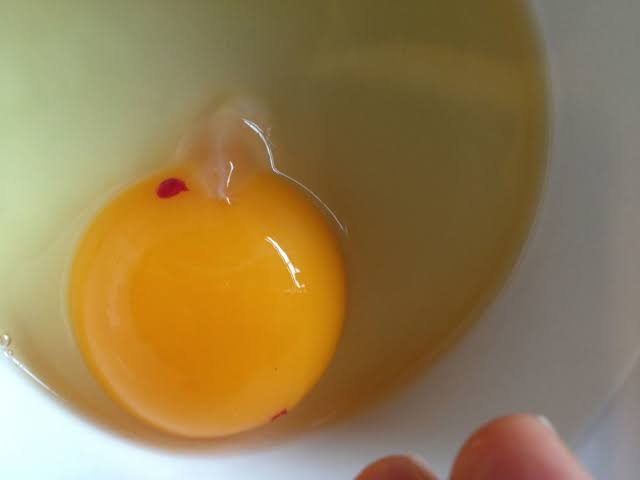
Cracking an egg into a bowl is usually an ordinary part of preparing breakfast. But occasionally, you may notice something unexpected: a tiny red spot on the yolk or egg white.
Naturally, this can raise questions. Is the red mark a sign of blood? Does it mean the egg has been fertilized? More importantly, is the egg still safe to eat?
The good news is that a small red spot inside an otherwise normal egg is usually a harmless occurrence. These marks are commonly known as blood spots, and they can develop naturally while an egg is forming inside a hen.
However, understanding why they appear and knowing how to recognize an egg that may have spoiled can help you make better decisions in the kitchen.
Let’s take a closer look.
What Does a Red Spot Inside an Egg Mean?
A red spot inside an egg is generally caused by a tiny blood vessel breaking during the egg-forming process.
As an egg develops inside a hen’s reproductive system, small blood vessels can occasionally rupture. A small amount of blood may then become trapped in the developing egg.
This can result in a reddish or brownish mark that becomes visible when the egg is cracked.
Blood spots may appear directly on the yolk or within the egg white. Their size can vary, ranging from a tiny dot to a slightly larger mark.
Although the appearance may be surprising, a blood spot does not automatically mean something is wrong with the egg.
It is also important to understand that a blood spot is not evidence of an embryo developing inside the egg.
Does a Blood Spot Mean the Egg Is Fertilized?
This is one of the most common questions people ask after discovering a red mark inside an egg.
The answer is no.
A blood spot is generally the result of a small blood vessel rupturing during egg formation. It is not an indication that the egg has been fertilized.
Fertilization and blood spots are two different biological processes.
Even eggs from hens that have not been exposed to a rooster can occasionally contain blood spots.
Therefore, finding a small red mark does not mean that the egg contains a developing chick.
Why Do Blood Spots Appear in Eggs?
There are several possible reasons why a hen may produce an egg containing a blood spot.
Some of the contributing factors include:
- Small blood vessel ruptures: A tiny vessel may break while the yolk is being released during the egg-forming process.
- Age of the hen: The frequency of certain egg irregularities can vary with the age of the bird.
- Genetics: Some differences between individual hens may influence the likelihood of blood spots.
- Environmental factors: Stress and other conditions affecting a hen’s health may influence egg production.
These spots are natural biological occurrences rather than proof that the egg has been improperly handled.
Commercial egg producers commonly use a process called candling to inspect eggs.
During candling, eggs are examined using a bright light that makes it easier to identify certain internal imperfections. However, small spots can sometimes go undetected.
This is one reason you may occasionally discover a blood spot after cracking an egg at home.
Are Eggs With Blood Spots Safe to Eat?
In most cases, yes. A small blood spot alone does not make an otherwise fresh egg unsafe to consume.
The spot is generally considered a natural quality irregularity rather than a sign of spoilage.
However, normal food-safety precautions still apply.
An egg containing a blood spot should be evaluated in the same way as any other egg. Check its appearance, smell, storage history, and overall condition.
If everything appears normal, the egg can generally be used after proper cooking.
You can also remove the visible spot with a clean spoon if you prefer. This is optional and mainly a matter of personal preference.
There is no need to discard an otherwise normal egg solely because it contains a tiny red mark.
Blood Spots vs. Meat Spots: What’s the Difference?
Another type of unusual mark that can appear inside an egg is called a meat spot.
Although these two imperfections can look similar, they have different characteristics.
Blood spots:
- Usually appear red, reddish-brown, or dark red.
- Are associated with small blood vessel ruptures.
- Can appear on the yolk or in the egg white.
Meat spots:
- Often appear brown, tan, or gray.
- May consist of small pieces of tissue or other natural material incorporated during egg formation.
- Can appear as tiny irregular particles.
Both types of marks can occur naturally during egg development.
However, an unusual appearance should never be the only factor used to determine whether an egg is safe. Freshness, proper storage, and signs of spoilage are also important.
When Should You Throw an Egg Away?
Although a small blood spot is generally harmless, other changes may indicate that an egg is no longer suitable for consumption.
Pay attention to the following warning signs:
1. An Unpleasant Smell
A spoiled egg may have a strong, unpleasant odor, sometimes resembling sulfur or rotten food.
If an egg smells unusual after cracking, discard it.
2. Unusual Coloring
Pink, green, or black discoloration may indicate contamination or spoilage. Do not consume an egg with these unexplained changes.
3. Mold or Visible Contamination
Any visible mold or suspicious material on the shell or inside the egg is a reason to discard it.
4. Damaged Shells
Cracked eggs can become contaminated, particularly if they have been stored improperly or left exposed for an extended period.
5. Improper Storage
Eggs that have been left unrefrigerated beyond recommended food-safety limits should be discarded, even if they look and smell normal.
One important point: smell and appearance cannot reliably identify every harmful microorganism. When an egg has been stored incorrectly or you are uncertain about its safety, it is better not to take the risk.
How to Handle and Store Eggs Safely
Proper egg storage and preparation are important for reducing the risk of foodborne illness.
Here are some useful habits to follow:
- Keep eggs refrigerated: Store eggs at 40°F (4°C) or below when refrigeration is required.
- Check the shells: Avoid using eggs with cracked or damaged shells.
- Wash your hands: Clean your hands after handling raw eggs.
- Clean kitchen surfaces: Wash bowls, utensils, countertops, and other surfaces that come into contact with raw eggs.
- Cook eggs thoroughly: Cook until the whites and yolks are firm, or use a food thermometer to ensure egg dishes reach a safe internal temperature of 160°F (71°C).
- Take extra precautions: Pregnant individuals, older adults, young children, and people with weakened immune systems should avoid raw or undercooked eggs. Pasteurized eggs are a safer option for recipes that require uncooked or lightly cooked eggs.
Following these precautions helps protect your household while allowing you to enjoy eggs in a variety of meals.
Frequently Asked Questions
1. Can I eat an egg if I find a small red dot?
Usually, yes. A small blood spot alone does not indicate spoilage. If the egg is fresh, properly stored, and otherwise normal, it can generally be eaten after thorough cooking.
2. Does a red spot mean there is a baby chick inside?
No. Blood spots are generally caused by small blood vessel ruptures during egg formation. They do not indicate that an embryo is developing.
3. Why do some farm-fresh eggs have blood spots?
Commercial eggs are commonly inspected through a process called candling. Eggs from smaller farms or backyard flocks may undergo different inspection practices, so internal imperfections may be more noticeable when they are cracked.
4. Can I remove the blood spot before cooking?
Yes. If the appearance bothers you, you can carefully remove it with a clean spoon. However, removing the spot is not necessary when the egg is otherwise safe.
5. Can an egg with a blood spot be used for baking?
Generally, yes. If the egg is fresh, properly stored, and shows no signs of spoilage, it can be used in baked recipes after following appropriate food-safety practices.
6. Are blood spots more common in brown eggs?
No. Blood spots can occur in eggs with shells of different colors. Shell color does not determine whether an egg contains a blood spot.
Final Thoughts
Discovering a red spot inside an egg can certainly be unexpected, especially when you are preparing breakfast or baking something at home.
Fortunately, these small marks are usually a natural result of the egg-forming process and do not automatically indicate fertilization or spoilage.
The important thing is to distinguish an ordinary blood spot from other warning signs, such as unpleasant odors, mold, unusual discoloration, or improper storage.
If the egg is otherwise normal and has been handled correctly, a small red spot is generally not a reason to throw it away.
So, the next time you crack an egg and notice a tiny red mark, there is no need to panic. A little knowledge about how eggs develop can make an unexpected kitchen discovery much less concerning.