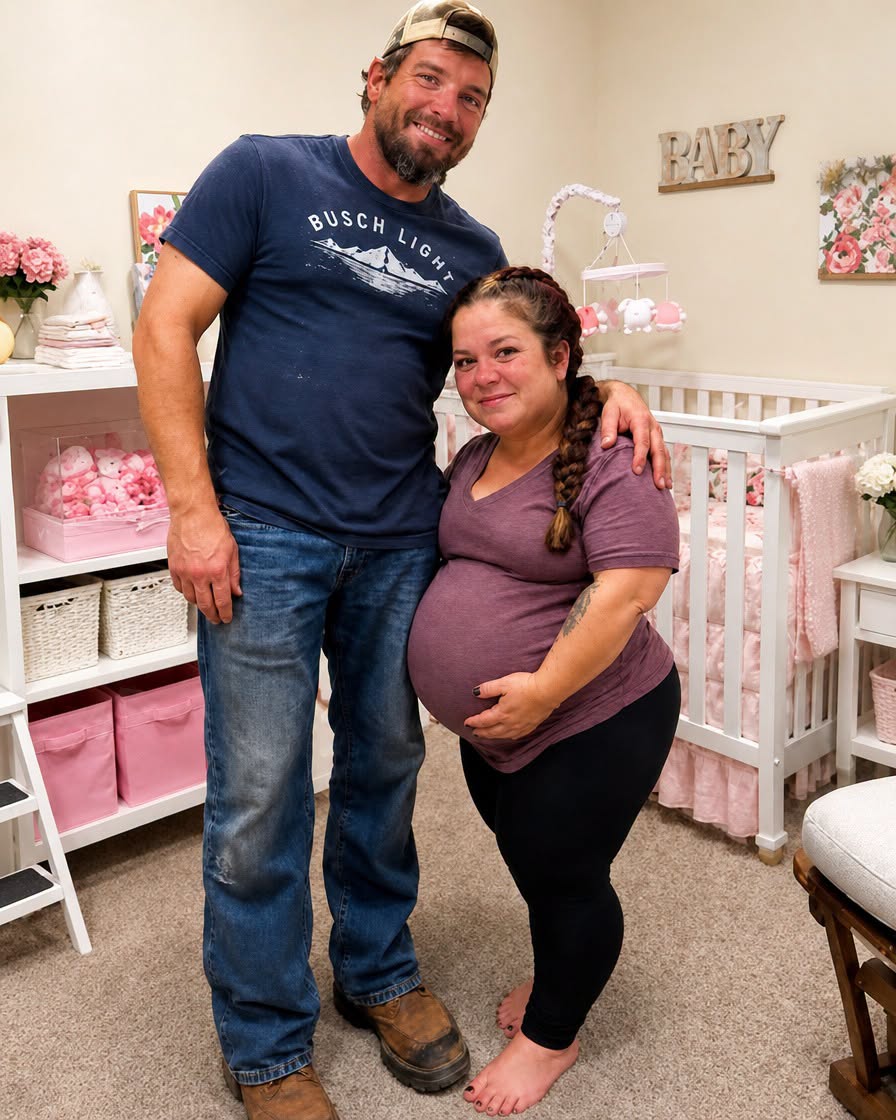
“Do you honestly believe someone like you should become a mother?”
Patricia, my mother-in-law, asked me that question while I was arranging the dinner table. I was three months pregnant at the time.
I stopped what I was doing and looked at her.
“What exactly are you suggesting?”
Her eyes moved toward my stomach.
“I’m talking about your medical condition, Sarah.”
“Michael and I have discussed the pregnancy with our doctors. We understand the possible challenges.”
Patricia shook her head.
“Doctors don’t always understand everything.”
Before I could respond, Michael walked into the kitchen.
“Is everything all right?”
Patricia immediately changed her expression.
“Of course, sweetheart. I was just asking Sarah how she’s feeling.”
I noticed the sudden change in her attitude, but I didn’t understand why she was behaving that way. I had no idea that her concerns would eventually lead to an offer that would change our family forever.
I was born with dwarfism and stood just 3 feet 8 inches tall. Growing up, I experienced years of unkind comments and unwanted attention because of my height.
At school, some children gave me hurtful nicknames. Others treated me as though I were someone to laugh at rather than a person with feelings.
High school wasn’t much easier. One boy invited me to prom as part of a joke with his friends. I spent hours choosing an outfit before discovering that the invitation had never been genuine.
After that experience, I avoided situations where I might become the subject of another joke.
As an adult, dating brought its own difficulties. Some men weren’t interested once they learned about my condition. Others seemed more curious about my appearance than about who I was.
By the time I turned 35, I had almost convinced myself that finding someone who genuinely loved me might never happen.
Then I met Michael.
He was 42, confident, kind, and easy to talk to. During our first date, he pulled out my chair, asked about my career, and listened carefully whenever I spoke.
He never made my height the center of our conversations.
When he called the following morning, I was genuinely surprised.
Two years later, we got married.
Michael treated me with kindness and respect. Whenever strangers stared, he simply reached for my hand. With him, I never felt that I needed to explain or apologize for who I was.
His mother, Patricia, was another matter.
She was always polite, but I never felt particularly welcome around her. At our wedding, she congratulated us without showing much warmth.
Whenever Michael mentioned having children, Patricia found a reason to change the subject.
At first, I assumed she was concerned about the medical considerations associated with my condition.
I had concerns too.
Because of my specific form of dwarfism and medical history, pregnancy required careful planning. Michael and I consulted specialists, discussed potential complications, and learned what additional monitoring would be necessary.
Our medical team explained that a planned C-section would be the safest delivery approach in my circumstances.
We considered the information carefully before making our decision.
When I discovered I was pregnant at 38, I couldn’t control my emotions.
I cried so much that Michael initially thought something had gone wrong.
“Sarah, what’s happening?”
Instead of answering, I handed him the pregnancy test.
He stared at it for several seconds before tears appeared in his eyes too.
We were going to have a baby.
From that day forward, Michael became even more involved in every stage of the pregnancy.
He attended medical appointments whenever possible, assembled the crib, and helped paint the nursery a soft shade of yellow.
We decided to name our daughter Charlotte.
My doctors monitored me regularly, and everything progressed well.
However, Patricia’s attitude became increasingly difficult.
When Michael showed her the first ultrasound photograph, she barely looked at it.
“Are you certain this is a good decision?” she asked.
Michael frowned.
“Mom, we’ve already discussed this.”
“I’m only worried about the baby.”
“Then you should ask Sarah how she’s feeling instead of questioning whether we should become parents.”
Patricia didn’t respond.
When I was six months pregnant, she visited our house and spent several minutes examining the nursery.
“You’ve purchased quite a lot of things,” she remarked.
“That’s what happens when you’re preparing for a baby,” I replied.
She ran her hand across the crib.
“Sometimes people become too attached to plans before knowing how things will turn out.”
I asked what she meant, but she simply said she was being practical.
At seven months, Patricia invited me to lunch.
Michael was working, and she specifically requested that I come alone.
I thought perhaps she wanted to improve our relationship.
When I arrived, she had already prepared tea. We exchanged a few polite comments before she disappeared into another room.
She returned carrying an envelope.
“I’ve been thinking about your circumstances,” she said.
“My circumstances?”
She placed the envelope on the table and pushed it toward me.
Inside was a check for $100,000.
I looked at the amount, then back at her.
“What is this supposed to mean?”
Patricia folded her hands.
“When the baby arrives, I want you to leave her at the hospital. I’ll take care of everything afterward.”
For a moment, I couldn’t believe what I had heard.
“You’re asking me to give up my daughter?”
“I’m offering you an opportunity to provide her with a better future.”
“She is my child.”
“Being her mother doesn’t automatically mean you’re the best person to raise her.”
I slowly pushed the envelope back across the table.
“Please leave my family alone.”
Patricia picked up the check.
“You’ll regret rejecting my offer.”
I stood up, struggling to control my emotions.
“I don’t want your money, and I don’t want another conversation like this. Please don’t contact me again.”
“You’re allowing your emotions to control your judgment,” she replied.
“No. I’m making my decision very clear.”
I left immediately.
Once I was inside my car, I sat quietly with both hands on the steering wheel.
For three decades, I had dealt with people making assumptions about what I could or couldn’t do because of my height.
But nobody had ever suggested that I should give up my own child because of it.
When Michael returned home, I told him everything.
He looked completely shocked.
“She offered you $100,000?”
I nodded.
“And she expected you to leave Charlotte at the hospital?”
“Yes.”
Michael reached for his phone, but I gently stopped him.
“Please don’t call her while you’re this upset.”
He sat beside me and took my hand.
“She will not be allowed to interfere with our daughter’s life.”
For the first time, I didn’t try to make excuses for his mother’s behavior.
The following morning, Michael called Patricia.
He explained that her offer was unacceptable and that she would not be welcome in our home or at the hospital.
Patricia insisted that she had only been trying to help.
Michael asked her one question.
“Who exactly were you trying to help?”
He ended the conversation shortly afterward.
We spent the remainder of the pregnancy without contacting her.
At 36 weeks, I organized Charlotte’s clothes and finished preparing the nursery.
At 37 weeks, Michael installed the baby car seat, and we packed our hospital bags.
My C-section was scheduled, and we were looking forward to meeting our daughter.
However, three days before the planned delivery, I woke up experiencing contractions.
“Michael,” I whispered.
He immediately woke up.
We contacted the hospital and followed the instructions given by the medical team. After assessing my condition, the doctors decided that the delivery needed to happen earlier than originally planned.
Michael held my hand as the medical staff prepared everything.
“You’re going to meet our little girl today,” he whispered.
At 38 weeks, Charlotte was born.
I heard her cry before I even saw her.
Michael leaned closer.
“She is beautiful.”
Our daughter weighed six pounds. She had dark hair, a tiny nose, and the smallest fingers I had ever seen.
After the medical team completed the necessary checks, a nurse carefully placed Charlotte against my chest.
I looked down at her and began to cry.
For the first time in years, I wasn’t thinking about the comments people had made about my body.
I was thinking about the wonderful thing it had accomplished.
It had carried my daughter.
“Hello, Charlotte,” I whispered.
Michael kissed my forehead, and we shared a moment of happiness that I had imagined for months.
But less than an hour later, a nurse entered my recovery room.
“There’s a woman downstairs who says she’s the baby’s grandmother.”
My heart immediately sank.
“Is her name Patricia?”
The nurse checked her information.
“Yes, that’s the name she provided.”
“She isn’t supposed to visit.”
The nurse hesitated.
“She says there may have been a misunderstanding.”
Before I could ask another question, another nurse entered the room.
She looked carefully at Charlotte’s identification band.
“Could you tell me who brought the baby into this room?”
Michael stood up.
“Why? What’s wrong?”
The nurse politely asked us not to move the bassinet while she checked something in the records.
I tried to sit up, but the movement caused discomfort.
“What is happening? That’s our daughter!”
The nurse reassured me that Charlotte was receiving proper care. However, she needed to verify a discrepancy in one of the identification records.
A moment later, we heard a raised voice in the hallway.
“I’m her grandmother! I have every right to see her!”
It was Patricia.
Michael moved toward the door, but the nurse asked him to remain nearby while the identification check was completed.
Another staff member arrived with the delivery paperwork.
They compared Charlotte’s ankle band with my identification band and reviewed the information recorded at birth.
One number had been entered incorrectly during a transfer between departments.
After checking the original records, the staff confirmed that the identification bands matched and that Charlotte had remained with the appropriate medical team.
Our daughter was safe.
I finally relaxed and began crying from relief.
“I’m sorry this frightened you,” the nurse said. “We simply needed to confirm that every detail was correct.”
Outside, Patricia continued calling for Michael.
“Tell them I need to see my granddaughter!”
Michael looked at me.
I wasn’t ready to have her near Charlotte.
“Please speak to her outside,” I said. “She isn’t coming into this room.”
Michael stepped into the hallway.
I could hear parts of their conversation through the door.
“How did you find out we were here?” he asked.
“Your aunt mentioned that Sarah was due soon. I called to find out whether the baby had arrived.”
“Why did you come here?”
“I thought you might need help with some arrangements.”
“What arrangements?”
There was a brief silence.
“For Charlotte.”
Michael’s voice became serious.
“What have you been planning?”
Patricia began explaining that she had already prepared a nursery at her house. She had purchased baby clothes, a crib, and other supplies.
She had even told several relatives that she expected to become Charlotte’s primary caregiver.
I stared toward the doorway.
Suddenly, her earlier comments about our nursery and the $100,000 check took on a different meaning.
When Michael returned, his expression was difficult to read.
“Sarah, there’s something else you need to know.”
“What happened?”
“Mom wasn’t planning to help us find another family for Charlotte. She intended to take her home herself.”
I felt my stomach tighten.
“She wanted to raise our daughter?”
Michael nodded.
“She genuinely believed that if she offered you enough money, you would leave Charlotte behind and walk away.”
I looked toward the bassinet.
“She thought she could take my baby?”
“She told relatives that she would be raising her.”
I struggled to understand what I was hearing.
“Did you know anything about this?”
“No. I promise I didn’t.”
I believed him, but I couldn’t understand why Patricia thought she had the right to make such decisions.
“Why would she believe this was acceptable?”
Michael shook his head.
“She keeps saying she knows what’s best.”
Patricia was still outside.
I eventually agreed to speak with her, but only at the doorway with a nurse nearby.
When she appeared, her eyes immediately moved toward Charlotte’s bassinet.
“Is the baby all right?”
“She’s perfectly fine,” I replied. “And she’s staying with us.”
Patricia looked uncomfortable.
“I never wanted to upset you.”
“You offered me $100,000 to give up my daughter.”
“I wanted her to have a secure future.”
“With you?”
She didn’t answer.
I looked directly at her.
“Why are you doing this, Patricia?”
Her eyes began filling with tears.
“You don’t understand what it means for a child to grow up different.”
I stared at her.
“I understand much more than you realize.”
She shook her head.
“You don’t understand what it does to a mother.”
Michael stepped closer.
“Mom, what are you talking about?”
Patricia looked at him for several seconds before quietly saying something none of us expected.
“You weren’t my first child.”
Michael became completely still.
“What?”
“Before you were born, I had a little girl.”
Her name was Anna.
Patricia explained that Anna had also been born with dwarfism.
At the time, Patricia was young and frightened. Her husband and his relatives reacted negatively to the diagnosis.
They repeatedly told her that raising a child with a disability would be too difficult and that the little girl would face a lifetime of challenges.
Eventually, Patricia agreed to let another family adopt Anna.
Michael stared at his mother.
“You had a daughter before me?”
Patricia nodded.
“And you never told me?”
“I couldn’t bring myself to discuss it.”
She wiped her eyes.
“For years, I convinced myself that I had made the right decision and that Anna was living a better life.”
I looked at her carefully.
“Do you know what happened to her?”
Patricia shook her head.
“I received one letter saying she was healthy. After that, I never heard anything else.”
Her voice became emotional.
“I don’t even know where she is today.”
Nobody spoke for several moments.
I felt sadness for the young woman Patricia had once been. But I also felt deeply hurt by what she had tried to do to me.
“You wanted me to make the same decision you made,” I said.
Patricia looked down.
“I thought you might eventually understand.”
“Understand what?”
“That sometimes loving a child means allowing someone else to raise them.”
I took a breath.
“There are circumstances where adoption can be the right decision. But that decision belongs to the parents, and it should be made with care and consideration. You never asked what I wanted or what Charlotte needed.”
Patricia began crying.
“When I discovered you were pregnant, I kept remembering Anna. Everyone told me she would have a difficult life because she was different.”
I looked at her.
“And seeing me prepare for motherhood made you question everything you had been told?”
She didn’t respond.
I began to understand that Patricia had spent decades trying to convince herself that giving Anna up had been necessary.
Seeing me preparing to raise Charlotte with love and confidence challenged the beliefs she had carried for so long.
Instead of confronting those feelings, she had tried to make me follow the same path.
Michael turned toward his mother.
“Did Dad know about Anna?”
“Of course. We both agreed not to discuss it.”
Michael shook his head.
“I grew up believing I was your only child.”
Patricia reached toward him.
“Michael, please understand.”
He stepped back.
“I understand that you have regrets. But you tried to separate my daughter from her mother.”
“I only wanted to protect her.”
Michael looked directly at her.
“Charlotte is not Anna, Sarah is not you, and you cannot decide what our daughter’s future should look like.”
Patricia looked toward me.
“Can I at least hold her?”
I shook my head.
“Not today.”
For once, she didn’t argue.
She quietly left the hospital.
The following days were physically and emotionally exhausting.
I was recovering from surgery, learning to care for Charlotte, and adjusting to the interrupted sleep that comes with having a newborn.
Michael helped with everything.
Whenever Charlotte slept, we talked about Anna.
Michael was deeply affected by learning that he had an older sister he had never known about. He wanted to understand what had happened and wondered whether finding her might still be possible.
We agreed that he could explore the family history when he felt ready.
But Charlotte’s arrival would not become another opportunity for Patricia to revisit her past decisions.
Our daughter deserved a peaceful beginning.
When we finally brought Charlotte home, Michael carried her through the front door.
I followed slowly.
He placed her gently in the crib we had prepared together.
She opened her eyes briefly, stretched her little arms, and went back to sleep.
I smiled.
After everything that had happened, that simple moment felt incredibly special.
Two weeks later, Patricia sent us a letter.
She apologized for the money she had offered and acknowledged that preparing a nursery without our knowledge had been inappropriate.
She also wrote about Anna.
For the first time, she admitted that she didn’t know whether giving her daughter up for adoption had been the right decision.
Michael read the letter more than once.
Then he asked me what I thought.
“I think she’s finally beginning to face something she’s avoided for many years,” I replied.
“Does that mean we should let her visit Charlotte?”
“Not yet.”
He nodded.
We understood that Patricia was dealing with painful memories, but that didn’t mean we had to overlook her actions.
If she ever became part of Charlotte’s life again, it would have to happen with mutual respect and clear boundaries.
One evening, I sat in Charlotte’s nursery with her resting peacefully against my chest.
Michael was preparing dinner in the kitchen.
I studied our daughter’s tiny face and thought about the lessons I wanted her to learn as she grew older.
I wanted her to know that she was loved.
I wanted her to understand that her body did not determine her value.
Most importantly, I wanted her to grow up knowing that being different would never make her less deserving of happiness, friendship, or respect.
For thirty years, I had encountered people who made assumptions about my abilities and my future because of my height.
There had been moments when their words made me question myself.
Patricia had carried similar beliefs about her own daughter, and those beliefs had influenced decisions she now struggled to face.
I couldn’t change what had happened to Anna.
But I could make sure Charlotte grew up knowing that she belonged exactly where she was: with parents who loved her.
I kissed her forehead.
“You never have to prove your worth to anyone, sweetheart.”
She moved slightly before settling comfortably against me.
Patricia had believed that $100,000 could persuade me to walk away from my daughter.
She had underestimated the love I had for the little girl I had waited so long to meet.
As I held Charlotte close, I knew one thing with absolute certainty.
No amount of money could ever replace the privilege of being her mother.
And no one else would get to decide whether I deserved that privilege.