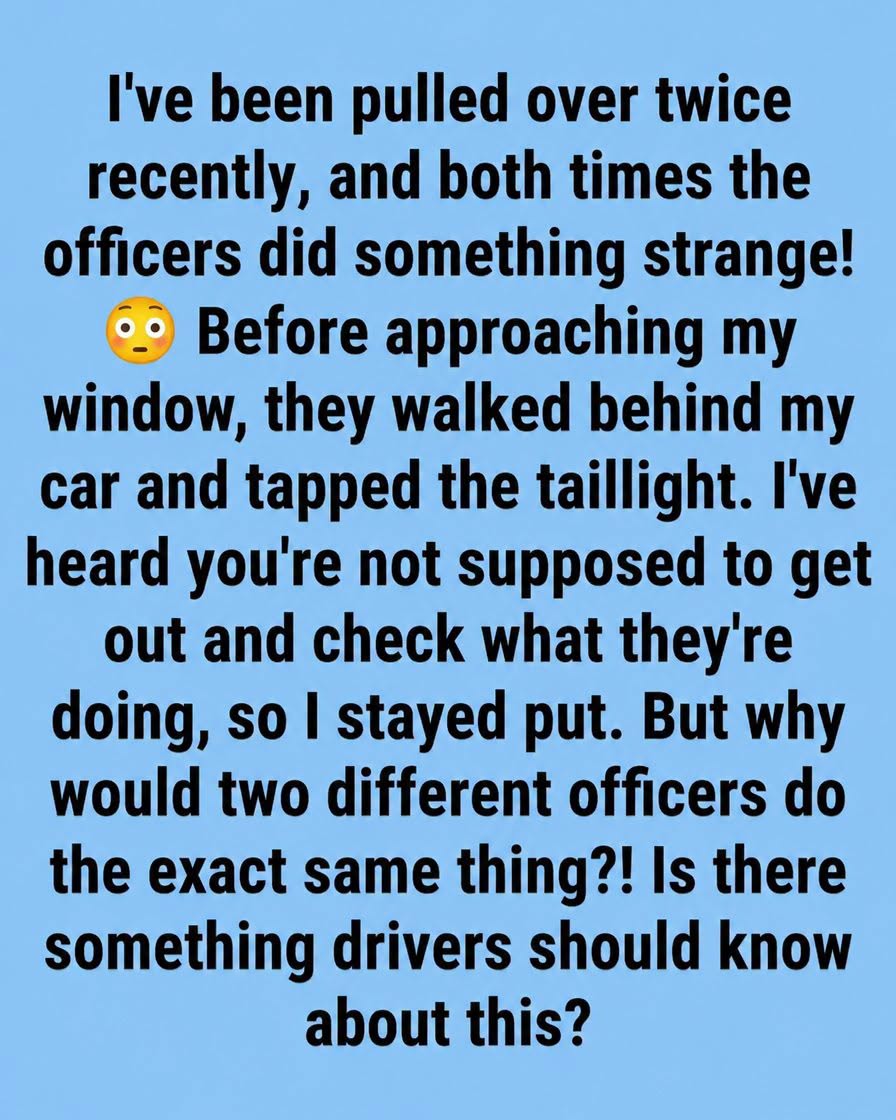
Have you ever noticed a police officer briefly touching the rear of a vehicle during a traffic stop? It might look like an ordinary gesture, but there are several interesting reasons behind this long-standing practice.
For many drivers, the action raises questions. Why would an officer touch the trunk or tail light before approaching the driver’s window? Is it simply a habit, or does it serve a practical purpose?
The explanation is connected to traditional police procedures, documentation, and officer safety.
1. Leaving a Record of Physical Contact
One historical explanation is that officers sometimes touched the exterior of a vehicle to leave their fingerprints behind.
Before dashboard cameras and body cameras became common, this was considered one way to establish that an officer had physically approached or touched a particular vehicle.
If an incident occurred during or after a traffic stop, those fingerprints could potentially provide additional information about the officer’s contact with the vehicle.
However, fingerprints alone could not establish exactly what happened during an encounter.
2. Maintaining Awareness During a Traffic Stop
Officer safety is another important consideration.
Approaching an unfamiliar vehicle requires officers to remain attentive to their surroundings. A brief touch of the rear exterior may help an officer maintain awareness of the vehicle while approaching it.
Officers are trained to observe their surroundings, pay attention to unexpected movements, and follow established safety procedures.
Every traffic stop presents different circumstances, so officers must remain alert throughout the interaction.
3. Why the Practice Has Changed Over Time
Police procedures have evolved considerably over the years.
Modern technology has introduced several tools that help document traffic stops, including:
- Dashboard cameras that record activity around police vehicles.
- Body cameras that capture interactions between officers and motorists.
- Digital reporting systems that preserve information about traffic encounters.
- Departmental communication systems that help officers document their activities.
These tools provide additional documentation that was not readily available in earlier decades.
As a result, leaving fingerprints on a vehicle is no longer considered necessary in many departments.
4. Do All Police Officers Still Do This?
No. Police procedures vary depending on the department, training practices, and individual circumstances.
Some officers may continue touching the rear of a vehicle as part of their established routine, while others approach vehicles differently.
It is important to understand that there is no single explanation that applies to every officer or every traffic stop.
The gesture may be related to traditional practices, personal habits, or other aspects of an officer’s approach.
5. What Should Drivers Do During a Traffic Stop?
For motorists, the most important thing is to remain calm and avoid sudden movements.
A few simple practices can help make the interaction more comfortable:
- Keep your hands visible.
- Avoid reaching into compartments without first explaining what you are doing.
- Listen carefully to the officer’s instructions.
- Provide requested documents when legally required.
- Politely ask questions if you do not understand something.
Remaining calm and communicating clearly can help prevent unnecessary misunderstandings.
The Interesting History Behind a Familiar Gesture
The next time you notice a police officer briefly touching the back of a vehicle, remember that the action has historical connections to police documentation and traditional safety practices.
Although modern technology has changed how traffic stops are recorded, some older habits remain part of everyday police routines.
What may look like a mysterious gesture is often simply a reminder of how law enforcement practices have evolved over time.