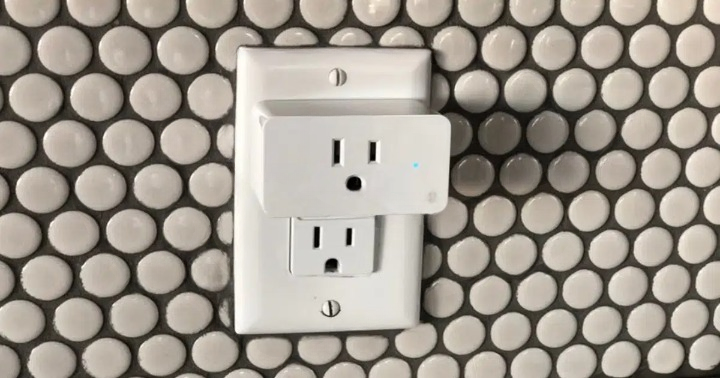
Have you ever walked into a bedroom, living room, or hotel room and noticed that one of the electrical outlets is installed upside down? If you are used to seeing wall sockets with the grounding opening at the bottom, the unusual orientation can immediately catch your attention.
At first, you might assume that an electrician made a mistake or that someone installed the outlet incorrectly during a renovation. However, there is often a practical reason behind this seemingly unusual arrangement.
In some homes, an upside-down electrical outlet is used as a visual indication that the receptacle is controlled by a nearby wall switch. This arrangement can be particularly useful in rooms where a traditional ceiling light was never installed.
Instead of relying on an overhead fixture, homeowners can connect a table lamp or floor lamp to a switched outlet and operate it using the wall switch.
However, there is an important detail worth understanding: not every upside-down outlet is switch-controlled. Electrical outlet orientation can vary depending on local practices, installation preferences, and the original design of the building.
So, why do some electricians install outlets this way? How can you determine whether a wall switch controls a particular receptacle? And should you be concerned if you notice one in your home?
Let’s take a closer look at this interesting household detail.
1. An Upside-Down Outlet May Be Connected to a Wall Switch
One of the most common explanations for an upside-down wall outlet is that it may be connected to a nearby light switch.
This arrangement is often found in bedrooms, living rooms, family rooms, and older properties.
In some homes, particularly those built before overhead lighting became a standard feature in every room, electricians provided switched electrical receptacles instead of ceiling fixtures.
The idea was simple.
A homeowner could plug a lamp into the designated outlet and control it using a wall switch near the entrance.
This made it possible to illuminate a room without walking across a dark space to operate a lamp manually.
For example, imagine entering a bedroom at night. Instead of searching for a bedside lamp in the darkness, you could simply flip the wall switch near the doorway.
The lamp connected to the switched receptacle would turn on automatically.
This practical arrangement is one reason upside-down outlets sometimes appear in older houses.
2. Sometimes Only One Half of the Outlet Is Controlled by the Switch
Here is another interesting detail that many homeowners do not realize.
A standard duplex receptacle has two plug openings, but both do not necessarily have to operate in the same way.
In some installations, only one half is connected to the wall switch.
This means one plug remains powered continuously, while the other receives power only when the associated switch is turned on.
For example:
- The continuously powered opening can be used for a clock, charger, or another device that needs uninterrupted electricity.
- The switch-controlled opening can operate a table lamp or floor lamp.
- Turning off the wall switch interrupts power to the controlled portion without affecting the other opening.
This arrangement offers flexibility because homeowners can use one outlet for different purposes.
However, the configuration is not universal. Some receptacles have both halves controlled by the switch, while others remain permanently powered.
The actual wiring arrangement must be verified rather than assumed from the outlet’s appearance.
3. Why Would an Electrician Use the Upside-Down Position?
The orientation of an electrical receptacle can serve as a convenient visual clue.
If most outlets in a house have their grounding openings facing downward, but one has its grounding opening facing upward, it may have been intentionally installed differently.
An electrician might use this arrangement to distinguish a switched receptacle from ordinary outlets in the same room.
This can make it easier for homeowners and future electricians to recognize which outlet has a special function.
It can also be useful when someone moves into a property and needs to understand which wall switch operates which electrical feature.
However, it is important to remember that this is a convention, not a guaranteed identification method.
Different electricians may follow different installation preferences. Some install switched outlets upside down, while others use labels, different wiring arrangements, or no visual distinction at all.
Therefore, an upside-down receptacle should be treated as a possible clue rather than proof of a particular electrical configuration.
4. There Is No Universal Rule Requiring Every Switched Outlet to Be Upside Down
One of the biggest misconceptions about outlet orientation is that electrical regulations require switch-controlled receptacles to face a particular direction.
In the United States, there is no general national requirement that every switched wall receptacle must be installed upside down.
The National Electrical Code establishes many important electrical installation and safety requirements, but the orientation of an ordinary residential receptacle is not a universal indicator of whether it is controlled by a switch.
Local requirements, installation specifications, and individual electrician preferences can influence the final arrangement.
For example, an electrician might install every receptacle in a home with the grounding opening facing downward simply because that is the preferred approach.
Another electrician might install certain receptacles with the grounding opening facing upward to distinguish them from other outlets.
In older properties, an outlet may also have been replaced during a renovation without preserving the original orientation.
This explains why two homes with similar layouts can have completely different outlet arrangements.
The important lesson is not to assume that an unusual orientation automatically indicates a problem or a particular wiring setup.
5. How to Find Out Whether a Wall Switch Controls an Outlet
If you discover an upside-down outlet in your home, you may be curious about whether it is connected to a nearby switch.
Fortunately, you can perform a basic functional check without opening the electrical box or touching any wiring.
A simple plug-in lamp is usually enough.
Here is a straightforward approach:
Step 1: Find the nearby wall switches.
Look for switches located near the room entrance or close to the outlet.
Step 2: Use a working lamp.
Plug a properly functioning lamp into one receptacle opening.
Step 3: Check the wall switch.
With the lamp switched on, operate the nearby wall switch and observe whether the lamp responds.
Step 4: Check the other opening.
If the first opening does not respond, repeat the observation with the second opening.
Step 5: Check other nearby switches.
Sometimes the relevant switch is located farther away or controls another outlet in the same room.
Use only an intact lamp and undamaged receptacle. Never insert tools or other objects into the outlet openings.
If the outlet behaves unexpectedly, appears damaged, or does not work properly, stop using it and have it inspected by a qualified electrician.
6. Why Some Electricians Prefer Grounding Openings at the Top
Another reason an outlet might appear upside down has nothing to do with a wall switch.
Some electricians intentionally install receptacles with the grounding opening facing upward.
This orientation is sometimes referred to as a ground-up installation.
The grounding opening is designed to accommodate the grounding pin found on properly grounded electrical plugs.
One reason some professionals prefer this arrangement involves the possibility of a metal object falling behind a partially inserted plug.
With certain plug and receptacle configurations, a grounding pin positioned at the top may help reduce the likelihood that a falling metal object will contact the energized prongs first.
This is one reason ground-up installations are sometimes seen in commercial environments and other locations where particular installation practices are followed.
However, this does not mean that every ground-up receptacle has been installed for this reason.
Some electricians simply prefer the appearance or practical layout.
Both orientations can be acceptable when the receptacle is correctly installed and complies with applicable electrical requirements.
7. Does an Upside-Down Outlet Mean Something Is Wrong?
Not necessarily.
The direction in which an electrical outlet faces does not automatically determine whether it is safe or unsafe.
A properly installed receptacle can face either direction, depending on the installation and applicable requirements.
Electrical safety depends on much more important factors, including:
- Correct wiring connections.
- Proper grounding.
- Suitable receptacle ratings.
- Appropriate circuit protection.
- Secure installation.
- Compliance with applicable electrical codes.
A standard outlet installed upside down is not automatically defective.
Likewise, an outlet that looks perfectly normal is not necessarily safe if its wiring or connections are damaged.
If you notice a loose receptacle, visible discoloration, cracked plastic, unusual buzzing, a burning smell, or excessive warmth, stop using it and contact a licensed electrician.
These warning signs deserve attention regardless of which direction the outlet faces.
8. Why a Switched Outlet Can Be Mistaken for a Broken One
Imagine moving into a new home and plugging your phone charger into an outlet that suddenly stops providing power.
Your first thought might be that the receptacle is broken.
However, the explanation could be much simpler.
The outlet may be controlled by a wall switch that someone previously used to operate a lamp.
This is particularly common in older homes where switched receptacles were included as part of the original room lighting arrangement.
The same situation can occur after furniture has been rearranged or a homeowner has forgotten which switch controls which outlet.
Before assuming that a receptacle has failed, check whether a nearby switch operates it.
If the outlet remains unresponsive, there may be another explanation, such as a tripped circuit breaker, a protective device that has interrupted power, or an electrical fault.
Do not attempt to repair the wiring yourself if you are unfamiliar with electrical systems.
A qualified electrician can identify the cause and determine whether the receptacle requires attention.
9. What Should You Plug Into a Switch-Controlled Outlet?
If you discover that one half of an outlet is controlled by a wall switch, it is useful to consider what you connect to each opening.
A switched receptacle is particularly convenient for lighting.
For example, you might use it for:
- A bedside table lamp.
- A floor lamp beside a sofa.
- A decorative living room lamp.
- A reading light.
- Another suitable lighting device.
The continuously powered portion can be useful for equipment that should not unexpectedly lose power.
Examples include clocks, internet equipment, and other everyday electronics.
However, always confirm which portion is switched before connecting important equipment.
You should also avoid overloading receptacles.
Plugging several devices into a power strip does not increase the electrical capacity of the wall outlet or the circuit supplying it.
Follow the ratings and instructions for the receptacle, connected equipment, and any power strip you use.
High-powered appliances should be used according to their manufacturer’s requirements.
10. Can You Turn an Outlet Around Yourself?
Some homeowners notice an upside-down outlet and immediately consider changing its orientation.
After all, it might seem like a small cosmetic adjustment.
However, changing a receptacle’s position involves working with electrical wiring inside an electrical box.
Even when the goal is simply to change the direction of the outlet, the work can create risks if the wiring is not handled correctly.
Incorrect connections can lead to electrical shock, overheating, equipment damage, or fire hazards.
The situation may be more complicated in older homes, switched receptacles, and circuits with specialized wiring arrangements.
For this reason, it is best to have a licensed electrician inspect and make any necessary changes.
If you rent your home, contact the property manager or landlord before arranging electrical modifications.
There is rarely a good reason to change a correctly installed outlet simply because its orientation looks unusual.
11. Where Are Switch-Controlled Outlets Most Commonly Found?
Although switched receptacles can appear in different parts of a house, there are several locations where homeowners are more likely to encounter them.
Bedrooms: A switched outlet may have originally been intended for a bedside lamp or another room light.
Living rooms: Receptacles near sofas and seating areas can operate floor lamps that provide comfortable evening lighting.
Family rooms: Older homes sometimes use switched outlets as part of the main lighting arrangement.
Older houses: Properties built before overhead lighting became common in every room may contain several switched receptacles.
Rooms with limited ceiling fixtures: A wall switch and connected lamp can provide convenient illumination without requiring a ceiling-mounted light.
Modern homes may also have switched receptacles, although the exact arrangement depends on the electrical design.
12. A Small Detail That Can Reveal Something About Your Home
It is easy to overlook the electrical outlets around your house.
Most people use them every day without giving much thought to their design or orientation.
However, an outlet that appears different from the others may reveal something interesting about the way a room was originally planned.
It could indicate a switched receptacle, a particular installation preference, or simply a previous replacement.
Understanding these possibilities can help homeowners make better sense of their electrical systems.
The next time you notice an outlet installed upside down, take a moment to look for nearby switches and consider how the room is arranged.
You may discover that the outlet was designed to operate a lamp rather than provide continuous power.
Final Thoughts: That Upside-Down Outlet May Have a Practical Purpose
An upside-down electrical outlet is not necessarily a sign of a poor installation.
In many homes, this unusual orientation is used to distinguish a potentially switch-controlled receptacle from ordinary outlets.
It can be particularly useful in bedrooms and living rooms where lamps provide the main source of lighting.
However, outlet orientation is not a universal electrical standard for identifying switched receptacles. Some electricians use ground-up installations for other reasons, while others install all their outlets in the same direction.
The safest approach is to check the outlet’s operation using an ordinary lamp and nearby wall switches rather than relying on its appearance alone.
And if you notice any signs of electrical damage, have the receptacle inspected by a qualified professional.
Sometimes, the smallest details in a home have the most interesting explanations. That upside-down outlet may be one of them.