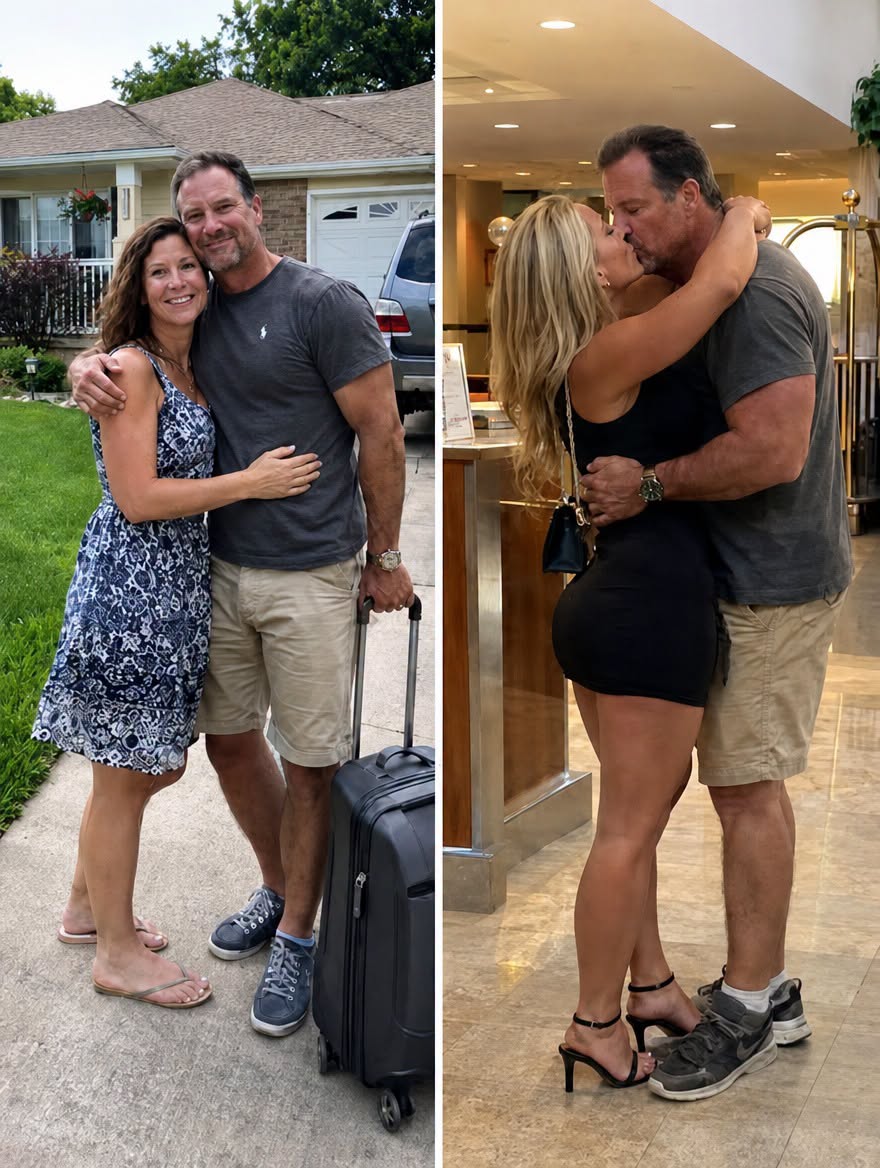
My name is Lorene, and I never imagined that the man I married would one day try to take control of something I had worked so hard to build.
I buried my first husband, Leroy, seven years ago. We had shared many years together, and although losing him was one of the hardest experiences of my life, I eventually learned how to move forward.
Three years ago, I married Harvey, a retired bus mechanic with kind eyes, a troublesome knee, and a habit of telling the same stories more than once.
At first, I believed I had found companionship again.
Harvey was pleasant, helpful around the house, and seemed genuinely interested in building a peaceful life together. He had a grown sister named Denise and a mother named Dorcas, who lived a few miles away.
I tried to maintain a good relationship with his family.
I invited them for Sunday dinners, remembered their birthdays, and included them in family celebrations. I believed that marriage meant making room for the people who mattered to your spouse.
However, I gradually noticed that Harvey had difficulty making decisions without consulting his mother.
If we wanted to purchase furniture, he called Dorcas.
If we planned a weekend trip, he asked whether she approved.
Even when we discussed something as ordinary as changing the curtains, he sometimes insisted on hearing his mother’s opinion first.
I initially found it amusing.
I told myself that some men simply remained close to their mothers throughout their lives.
But I eventually discovered that there was a difference between loving your mother and allowing her to control decisions that belonged to your marriage.
That difference became painfully clear when we decided to purchase a condominium.
After years of saving, I had accumulated enough money to make a substantial contribution toward a property where Harvey and I could enjoy our retirement.
We found a beautiful two-bedroom condominium priced at $240,000.
It had a spacious living room, a small balcony, a modern kitchen, and large windows that allowed sunlight to enter throughout the afternoon.
I loved it immediately.
Harvey walked through the living room and smiled.
“Imagine us sitting here every evening,” he said. “No more worrying about repairs or climbing stairs.”
I smiled.
“It would be wonderful.”
We agreed to move forward with the purchase.
I contributed most of the money from my personal savings and the proceeds of an investment I had maintained for years. Harvey contributed a smaller amount from his retirement savings.
We discussed the arrangement openly and agreed that the ownership documents should reflect the financial contributions and legal agreement we made.
At least, that was what I believed.
During the weeks that followed, I handled much of the paperwork. I reviewed the purchase agreement, organized financial statements, and communicated with the closing office.
Harvey occasionally complained that there were too many documents.
“Why do they make everything so complicated?” he would ask.
I would laugh.
“Because buying a home is a serious decision, Harvey. We should understand what we’re signing.”
He usually nodded and returned to watching television.
Three days before closing, something happened that changed everything.
I had gone to the kitchen to prepare lunch when I heard Harvey speaking on the telephone in the adjoining room.
He didn’t know I was nearby.
I wasn’t deliberately listening, but one sentence made me stop.
“My wife won’t read a thing,” he said.
I froze.
There was a brief pause.
Then I heard him laugh.
“Don’t worry, Denise. Mom will be on the deed. It’s only fair. She’s my mother, and she deserves something too.”
I stood completely still.
My heart began beating faster.
His sister responded, although I couldn’t hear every word.
Harvey continued.
“Lorene won’t make a fuss. I’ll explain it later. Once everything is signed, there won’t be much she can do about it.”
I felt as though someone had poured cold water down my back.
I waited until he ended the call.
Then I returned to the kitchen and continued preparing lunch as though I had heard nothing.
But my mind was racing.
Why was Dorcas being added to the deed?
Who had authorized the change?
And why had Harvey hidden it from me?
That afternoon, I contacted the closing office and requested a copy of the most recent ownership documents.
What I discovered confirmed my suspicion.
A revised document listed Harvey, me, and Dorcas as intended owners of the condominium.
My mother-in-law was being included despite contributing nothing toward the purchase.
I read the document several times.
It wasn’t simply a misunderstanding about a name on a form. It was a major change to the ownership arrangement we had previously discussed.
I felt betrayed.
I had spent years rebuilding my life after losing Leroy. I had worked hard to protect my savings and create a comfortable future.
Now the man I trusted was making decisions about my money without even discussing them with me.
I could have confronted Harvey immediately.
I could have shouted, demanded explanations, or called his mother.
But something told me that reacting emotionally would accomplish very little.
Instead, I decided to understand exactly what had happened.
The following morning, I contacted an independent real estate attorney and explained the situation.
I provided the original purchase documents, the revised ownership information, and evidence of the money I had contributed.
The attorney listened carefully.
After reviewing everything, she explained that the proposed ownership change could have significant consequences.
She also reminded me that I should never sign documents I did not understand or agree with.
“If you believe the ownership arrangement has been changed without your informed consent, you should address it before closing,” she advised. “You have every right to ask questions and request that the transaction be reviewed.”
She helped me prepare the necessary documents and explained the steps I could take to protect my financial interests.
I left her office feeling calmer.
I wasn’t looking for revenge.
I simply wanted honesty and fairness.
That evening, I baked Harvey’s favorite pound cake.
He walked into the kitchen, smelled the butter and vanilla, and smiled.
“Now that’s what I’m talking about,” he said. “You know how much I love this cake.”
I smiled politely.
“I know.”
He had no idea what I had discovered.
The following morning, he asked whether I was ready for the closing appointment.
“Of course,” I replied.
“Good. Mom is coming with us.”
I looked up from my newspaper.
“Your mother?”
“Yes. She wants to be there when we sign. She’s excited about the new place.”
I nodded.
“That’s fine.”
He smiled, apparently satisfied that everything was going according to plan.
But I had already packed my own folder.
Inside were copies of the original purchase agreement, the revised ownership documents, records showing my financial contribution, and a letter from my attorney explaining the concerns that needed to be addressed before the transaction could proceed.
I also had instructions about what to do if the parties could not agree on the ownership terms.
I placed the folder inside my purse and waited for closing day.
THE CLOSING TABLE
On the morning of the appointment, Harvey wore his best navy-blue suit.
Dorcas arrived shortly after us, carrying a handbag and wearing an expression of great satisfaction.
She greeted me warmly.
“Well, Lorene, we’re finally getting our new family home!”
I smiled.
“Yes. It’s certainly an important day.”
Harvey squeezed my hand.
“Everything is going to be wonderful.”
We entered the closing office and were shown to a conference room.
The closing agent introduced herself, arranged the documents, and began explaining the signing process.
I listened carefully.
Harvey seemed impatient.
Dorcas, on the other hand, appeared delighted.
When the revised deed was placed in front of her, she picked up the pen.
“Where should I sign?” she asked.
The closing agent pointed to the appropriate line.
That was when I spoke.
“Before you sign, Mrs. Whitley, there’s one more document I’d like everyone at this table to read.”
Dorcas stopped with the pen just above the signature line.
Harvey turned toward me.
His smile disappeared.
“What document?” he asked.
I reached into my purse, removed the navy-blue folder, and placed it carefully in the center of the table.
The closing agent looked at it.
“Mrs. Whitley, is this related to the purchase?”
“Very much so,” I replied. “I believe it changes everything about today’s appointment.”
Harvey leaned back.
“Lorene, what are you doing?”
I looked directly at him.
“Something I should have done three days ago.”
I opened the folder and removed the first document.
It was a copy of the original purchase agreement showing the financial arrangement we had discussed.
The second document contained records of my contribution toward the property.
The third was the revised ownership document.
I placed them side by side.
Then I looked at Harvey.
“Would you like to explain why your mother was added to the deed without my knowledge?”
The room became silent.
Dorcas lowered her pen.
Harvey’s face changed.
“What are you talking about?”
I pointed to the revised document.
“Your mother is listed as an intended owner. I never agreed to that arrangement.”
He shifted in his chair.
“Well, she’s my mother. I thought it was only right to include her.”
“Right for whom?” I asked.
He sighed.
“Lorene, don’t make this difficult. Mom has done a lot for me. I want her to have something secure.”
I nodded slowly.
“And I understand that you want to help your mother. But why did you decide to use a property I mostly paid for to accomplish that without discussing it with me?”
He didn’t answer.
Dorcas finally spoke.
“I don’t understand why you’re making such a big issue out of this. Harvey told me that the three of us would own the condominium together.”
I turned toward her.
“Did he tell you how much money I contributed?”
She hesitated.
“No.”
“Did he tell you that I never agreed to add another person to the ownership documents?”
She looked at Harvey.
He stared at the table.
For the first time, Dorcas seemed uncertain.
“Harvey, you told me everything was arranged.”
He rubbed his forehead.
“I was going to explain it.”
“When?” I asked. “After I signed? After the closing was completed?”
He looked irritated.
“You’re making it sound like I was trying to steal something.”
I took a breath.
“I don’t need to guess what you intended. I only need to look at what you did.”
The closing agent gently interrupted.
“Before anyone signs, I need to clarify that there is a discrepancy between the ownership arrangement previously discussed and the revised document. We cannot proceed until the parties understand and agree to the final terms.”
I nodded.
“That is exactly why I brought these documents.”
I then handed the closing agent the letter from my attorney.
She read it carefully and explained that the transaction would need to be paused while the ownership terms were reviewed and properly documented.
Harvey’s expression became increasingly uncomfortable.
Dorcas placed the pen on the table.
“This is embarrassing,” she muttered.
I looked at her.
“Imagine how embarrassing it was for me to discover that my husband had made this decision behind my back.”
She said nothing.
THE CONVERSATION I HAD BEEN AVOIDING
We left the closing office without completing the transaction.
Harvey barely spoke during the drive home.
When we arrived, he went straight into the living room.
I placed my purse on the dining table and followed him.
“Harvey, we need to talk.”
He shook his head.
“Not now, Lorene.”
“Yes, now. You’ve had three days to explain this.”
He turned toward me.
“Fine. I wanted to help my mother. Is that such a terrible thing?”
“No. Helping your mother isn’t terrible. Hiding a major financial decision from your wife is.”
He sat down heavily.
“She has very little security. I thought that if something happened to me, she would have somewhere to live.”
I looked at him carefully.
“Then why didn’t you discuss it with me? We could have explored other ways to help her.”
He didn’t answer immediately.
Finally, he admitted that Denise had encouraged him to add their mother to the deed.
According to him, his sister believed Dorcas deserved a permanent financial benefit because she had spent years helping Harvey.
I listened quietly.
Then I asked the question that mattered most.
“Did you ever consider how I would feel when I discovered that the property I helped purchase was being used to secure your mother’s future without my agreement?”
He looked away.
“I didn’t think you would react this way.”
I almost laughed.
“That’s because you assumed I wouldn’t notice.”
He had no response.
I reminded him that my money represented years of careful planning. I had not inherited it overnight, and I had not received it without effort.
It represented work, sacrifice, and decisions I had made long before we met.
“I married you because I wanted companionship,” I said. “I did not marry you so that my financial security could become something other people could distribute without my permission.”
Harvey lowered his head.
For a moment, I thought he might apologize.
Instead, he said something that hurt more than I expected.
“You’re acting as though I married you for your money.”
I looked at him.
“I sincerely hope that isn’t true. But your actions have given me a reason to question how much you respect the sacrifices I made.”
That evening, I slept in the guest bedroom.
I needed time to think.
THE DECISION THAT CHANGED EVERYTHING
The following morning, I met with my attorney again.
She explained the available options, including revising the ownership documents, postponing the purchase, or withdrawing from the transaction if the disagreement could not be resolved.
She also advised me to keep all financial records and avoid signing anything until the terms were clear.
I decided that I would not proceed with the purchase under the proposed arrangement.
If Harvey wanted his mother to receive a financial benefit, he needed to discuss that separately and transparently.
I was not going to allow pressure, guilt, or family expectations to determine what happened to my savings.
Two days later, Harvey asked to speak with me.
He looked tired.
“I’ve been thinking about what happened,” he began.
I remained quiet.
“I shouldn’t have changed the documents without telling you.”
It was the first genuine acknowledgment I had heard from him.
“You’re right,” I replied.
He continued.
“Denise kept telling me that Mom deserved something. I thought I could arrange it quietly and avoid an argument.”
I shook my head.
“Instead, you created a much bigger problem.”
He nodded.
“I understand that now.”
He then asked whether I would consider moving forward with the purchase if his mother were removed from the deed.
I told him I was willing to consider it, but only after an independent review of the documents and a written agreement that clearly reflected our respective financial contributions and ownership interests.
I also made it clear that I would not accept another surprise.
He agreed.
The revised transaction was eventually reviewed, and the ownership terms were corrected to reflect the arrangement we had both knowingly accepted.
Dorcas was not added to the deed.
The purchase was completed only after the legal and financial details had been properly addressed.
AN UNEXPECTED VISIT
Several weeks later, Dorcas came to our home.
I was surprised to see her standing at the door without Harvey.
She held a small handbag and looked uncomfortable.
“Can I come in, Lorene?”
“Of course.”
We sat in the living room.
For a few moments, neither of us spoke.
Then she surprised me.
“I owe you an apology.”
I looked at her.
She explained that Harvey had told her the condominium arrangement was already agreed upon. She had assumed that I knew about it and had accepted the decision.
She admitted that she should have asked me directly rather than simply trusting what her son had said.
“I didn’t realize how much money you had put into that property,” she continued. “And I didn’t understand that you had never agreed to share the ownership with me.”
I listened.
“I appreciate your apology,” I said. “But the problem was never that you wanted security. Everyone deserves to feel secure. The problem was that a decision affecting my future was made without my knowledge.”
She nodded.
“I understand.”
We didn’t suddenly become close friends, but the conversation was respectful.
When she left, I felt that at least one part of the situation had finally been addressed honestly.
WHAT I LEARNED ABOUT TRUST
Harvey and I continued our marriage, but things were different.
I no longer accepted explanations without asking questions, and he understood that financial decisions affecting both of us required open discussion.
We eventually moved into the condominium.
The living room looked exactly as I had imagined, and the afternoon sunlight filled the kitchen.
One evening, while we sat on the balcony, Harvey reached for my hand.
“I’m sorry I made you feel that you couldn’t trust me,” he said.
I looked at him.
“Trust isn’t something we can demand from one another. It’s something we build through our actions.”
He nodded.
I had not forgotten what happened, and I knew that rebuilding trust would take time.
But I also understood that protecting myself did not require me to become bitter.
I could remain loving without becoming careless. I could respect his relationship with his mother without surrendering my right to make decisions about my own finances.
Most importantly, I had learned that silence is not always a sign of agreement.
Sometimes, people remain quiet because they are gathering information, seeking advice, and deciding how best to protect themselves.
Harvey had mistaken my calm nature for ignorance.
He assumed that because I didn’t argue over every small matter, I would overlook something significant.
He was wrong.
And I was grateful that I had discovered the truth before signing away any rights I had not knowingly agreed to give.
Today, whenever I look around our condominium, I remember that difficult week.
I remember the revised deed, the closing table, Dorcas holding the pen, and the moment I placed my navy-blue folder between us.
I also remember something my attorney told me:
“A loving marriage should never require one person to remain uninformed about decisions that affect their future.”
That sentence has stayed with me.
I still believe in marriage, family, and helping the people we love.
But I also believe that love should never be used to excuse secrecy or financial dishonesty.
Harvey’s mother deserved respect and security, but so did I.
And I finally understood that protecting what I had worked for was not selfishness.
It was responsibility.
The greatest lesson I learned was this: Never allow someone to confuse your kindness with permission to make decisions on your behalf. You can love your family, respect your marriage, and still insist on honesty, fairness, and a voice in everything that affects your future.